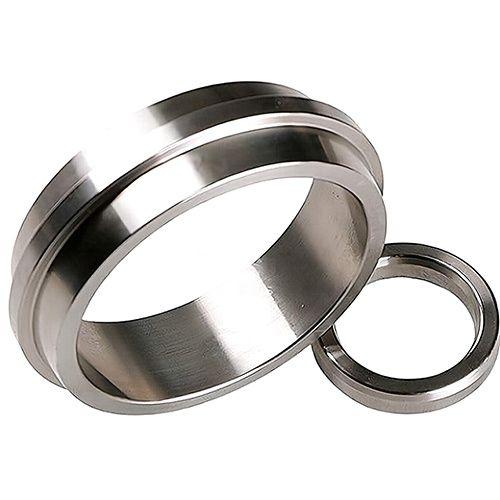
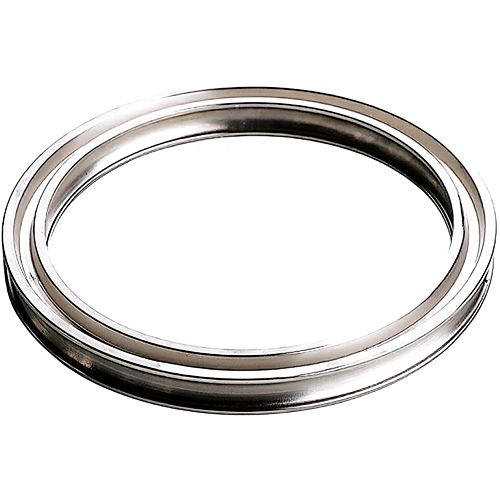
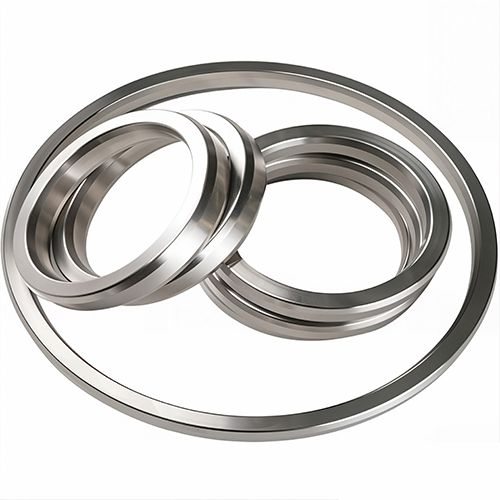
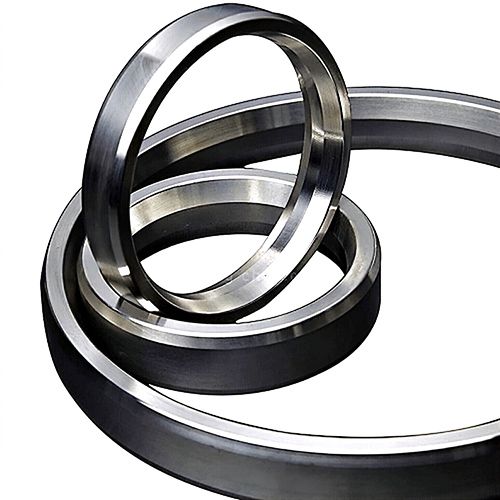
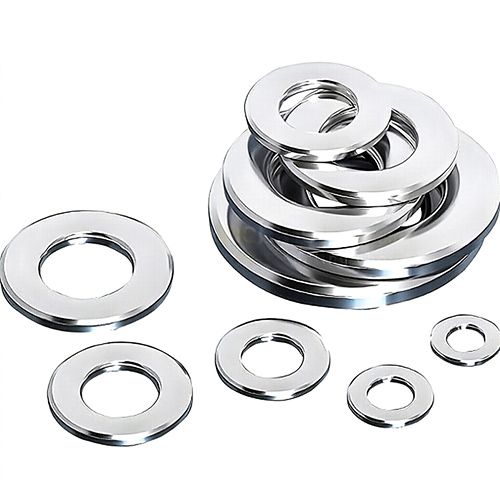
AX or CX and VX Ring Gaskets: The Ultimate Guide for Superior Sealing Performance
In the demanding world of industrial sealing, selecting the correct gasket is not merely a procurement decision; it is a critical engineering choice that impacts system integrity, safety, and operational cost. Among the most reliable and widely specified solutions for high-pressure, high-temperature applications are AX, CX, and VX ring gaskets. These precision-engineered metallic sealing rings are the cornerstone of leak-free connections in flanged systems across oil & gas, chemical processing, power generation, and aerospace industries. Kaxite Sealing, with decades of specialized expertise, manufactures these gaskets to the highest international standards, ensuring unmatched performance where it matters most.
The fundamental principle behind these ring gaskets is the "pressure-energized" seal. When flange bolts are tightened, the gasket is compressed, causing the raised profile (the "ring") to plastically deform and flow into the microscopic imperfections of the flange faces. This creates an initial seal. As internal system pressure increases, it acts on the inside of the gasket, forcing it further outward against the flange grooves and enhancing the sealing force. This self-energizing characteristic makes them exceptionally reliable under cyclic pressures and thermal fluctuations.
Detailed Product Parameters & Specifications
Understanding the distinct profiles, standards, and material options is key to proper selection. Below are the detailed parameters for each type.
AX Ring Gaskets (Self-Energizing Pressure Seal)
- Profile: Oval or octagonal cross-section. The octagonal profile provides a more well-defined sealing surface and is often preferred for higher pressures.
- Primary Standards: ASME B16.20, API 6A.
- Typical Applications: Wellhead equipment, Christmas trees, valve manifolds, and high-pressure piping systems (ASME B16.5 Class 1500 to 4500 and higher).
- Sealing Mechanism: Primarily pressure-energized. The initial bolt load creates a seal, and internal pressure enhances it.
- Flange Requirement: Requires specially machined recesses in both flange faces.
CX Ring Gaskets (Pressure Seal)
- Profile: Solid, rectangular cross-section with two rounded sealing beads (lips) on the top and bottom faces.
- Primary Standards: ASME B16.20.
- Typical Applications: Heat exchangers (shell-and-tube), channel covers, and high-pressure vessel closures where flange rotation might be an issue.
- Sealing Mechanism: The sealing beads concentrate the bolt load, creating high surface stress for an effective initial seal. Also benefits from pressure energization.
- Flange Requirement: Used on flat-faced or raised-face flanges; does not require a recess.
VX Ring Gaskets (Metal Ring Joint Gaskets)
- Profile: Typically an oval or round cross-section with a "V" or wedge-shaped indentation around the inner or outer circumference.
- Primary Standards: API 6A, ASME B16.20 (R-series and RX-series).
- Typical Applications: Extremely high-pressure and high-temperature services, such as downhole tools, subsea equipment, and critical pipeline valves.
- Sealing Mechanism: The wedge action from flange compression forces the soft metal (e.g., iron, copper) to flow and fill the flange serrations, creating a massive, quasi-metallurgical seal.
- Flange Requirement: Requires serrated (grooved) flange faces (e.g., API 6B Type BX, API 6A flanges).
Material Selection Guide
The choice of material is dictated by the service environment, including temperature, pressure, and media corrosivity. Kaxite Sealing offers a comprehensive range.
| Material Grade | Common Designation | Typical Hardness (Brinell) | Temperature Range | Key Characteristics & Applications |
|---|---|---|---|---|
| Soft Iron | ASTM A105 | 90 - 120 | -20°C to 450°C | Excellent conformability, standard for oil and gas production. Used for BX gaskets. |
| Low Carbon Steel | ASTM A350 LF2 | 120 - 180 | -45°C to 425°C | Good strength and ductility. Common for AX/CX rings in refinery service. |
| 304 Stainless Steel | ASTM A182 F304 | 140 - 200 | -250°C to 700°C | General corrosion resistance. For chemical and food processing. |
| 316 Stainless Steel | ASTM A182 F316 | 150 - 210 | -250°C to 700°C | Enhanced corrosion resistance, especially to chlorides. Marine environments. |
| Alloy 625 | UNS N06625 | 200 - 250 | -200°C to 980°C | Exceptional high-temperature strength, oxidation, and pitting resistance. For severe service. |
| Copper | C11000 | 80 - 100 | -250°C to 260°C | High thermal conductivity, excellent conformability. Used in heat exchangers and older standards. |
| Inconel 718 | UNS N07718 | 300 - 400 | -250°C to 700°C | Very high strength and corrosion resistance at elevated temperatures. Aerospace and deep-well. |
Kaxite Sealing's Manufacturing Excellence
At Kaxite Sealing, we transcend simple fabrication. Our manufacturing process integrates rigorous quality control at every stage:
- Material Sourcing & Verification: We procure raw materials only from certified mills. Each batch undergoes spectroscopic analysis to verify composition.
- Precision Machining: Utilizing state-of-the-art CNC lathes and machining centers, we achieve tolerances that far exceed those required by ASME and API standards, ensuring a perfect fit.
- Heat Treatment: Where required, controlled heat treatment processes are applied to achieve the precise hardness and material properties specified.
- Surface Finish: Critical sealing surfaces are finished to precise Ra (Roughness average) values to optimize sealing performance without compromising structural integrity.
- 100% Dimensional Inspection: Every single gasket is measured using calibrated micrometers, optical comparators, and CMMs (Coordinate Measuring Machines).
- Traceability: Each Kaxite Sealing gasket is permanently marked with material grade, size, and a unique heat code, providing full traceability back to the original material certification.
AX, CX, and VX Ring Gaskets: Frequently Asked Questions (FAQ)
Q: What is the main functional difference between an AX and a CX ring gasket?
A: The core difference lies in their design and interaction with the flange. AX ring gaskets (oval/octagonal) are designed to seat into a recessed groove in the flange faces. Their sealing is predominantly achieved through system pressure energizing the seal. CX ring gaskets have a rectangular shape with sealing beads and are used on flat or raised face flanges. They create a high-stress initial seal via the beads upon bolting, and are also pressure-energized. AX rings are typically for higher pressure classes in specific ring joint flanges, while CX rings are versatile for heat exchanger and pressure vessel applications.
Q: Can a VX ring gasket be reused after it has been compressed?
A: It is strongly discouraged and generally not recommended to reuse any metal ring joint gasket, including VX types, after it has been fully compressed in service. During installation, the soft metal flows plastically to conform to the flange serrations, creating a custom seal. Once disassembled, the gasket has undergone permanent deformation (cold flow) and its original dimensions and sealing capability are compromised. Reusing it poses a high risk of leakage. Kaxite Sealing always advises using a new, certified gasket for every critical joint make-up.
Q: How do I determine the correct hardness (grade) for my application?
A: Hardness selection is a critical balance. Softer materials (like soft iron) conform more easily to flange imperfections, making excellent seals but may extrude under very high pressure or temperature. Harder materials (like Alloy 625) resist extrusion and have high strength but require flanges with superior surface finish and higher bolt loads to achieve initial sealing. The selection is governed by the applicable standard (e.g., API 6A specifies required hardness for BX gaskets), operating pressure/temperature, and the flange material. Consulting the engineering specifications for your system or contacting Kaxite Sealing's technical support with your service conditions is the best approach.
Q: Are these gaskets suitable for subsea applications?
A: Yes, specific types are engineered for subsea use. VX ring gaskets, particularly those conforming to API 6A/17D specifications (like BX gaskets), are standard in subsea wellheads, trees, and manifold systems. For such demanding environments, material selection is paramount—often requiring high-grade corrosion-resistant alloys like Alloy 625 or 718. Furthermore, subsea gaskets may have stricter dimensional tolerances and require additional testing, such as helium leak testing. Kaxite Sealing provides gaskets that meet the stringent requirements of subsea oil and gas production.
Q: What is the proper procedure for installing AX/CX/VX ring gaskets?
A: Proper installation is vital for leak-free performance. Key steps include: 1) Inspection: Visually inspect flanges for damage, cleanliness, and verify the groove/serration condition. Clean all surfaces thoroughly. 2) Gasket Placement: Carefully place the new, clean gasket into the correct position (centered in the groove or on the face). Never use lubricants or anti-seize on the sealing surfaces. 3) Bolt Torquing: Follow a cross-pattern bolting sequence as specified by the flange manufacturer. Use calibrated torque wrenches and achieve the required bolt load in multiple incremental steps (e.g., 30%, 60%, 100% of final torque). This ensures even compression. 4) Re-torquing: For high-temperature services, a re-torque after an initial heat-up cycle may be specified to compensate for gasket relaxation and thermal expansion.
Q: Why should I choose Kaxite Sealing for my ring gasket requirements?
A: Kaxite Sealing distinguishes itself through an uncompromising commitment to quality, technical expertise, and customer support. We don't just supply a product; we provide a sealing solution. Our gaskets are manufactured with precision that ensures reliability in the most critical applications. Our technical team can assist with material selection, application engineering, and installation guidance. With full traceability, certified material, and adherence to international standards, choosing Kaxite Sealing minimizes risk, reduces total cost of ownership by preventing leaks and downtime, and ensures the integrity of your pressurized systems.