Octagonal Ring Joint Gaskets: The Ultimate Sealing Solution for High-Pressure, High-Temperature Applications
In the demanding world of industrial sealing, where extreme pressures and temperatures are the norm, failure is not an option. Pipe flanges, valve assemblies, and critical connections in oil & gas, chemical processing, and power generation require a seal that guarantees absolute integrity. This is where the precision-engineered Octagonal Ring Joint Gasket stands as the undisputed champion. At Kaxite Sealing, we have dedicated decades to perfecting the metallurgy, machining, and quality control behind these vital components, ensuring they perform flawlessly under the most severe service conditions.
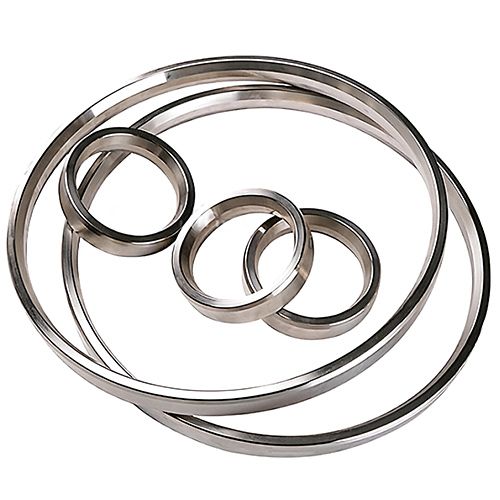
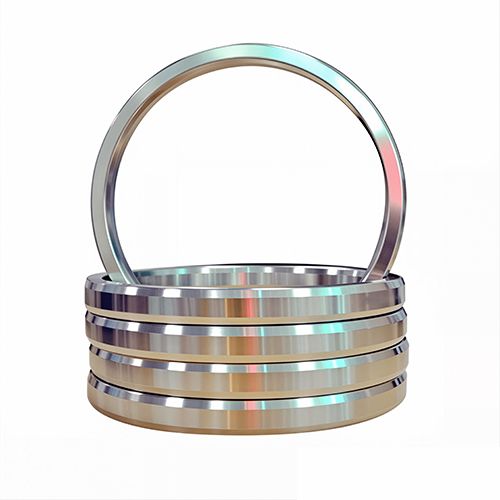
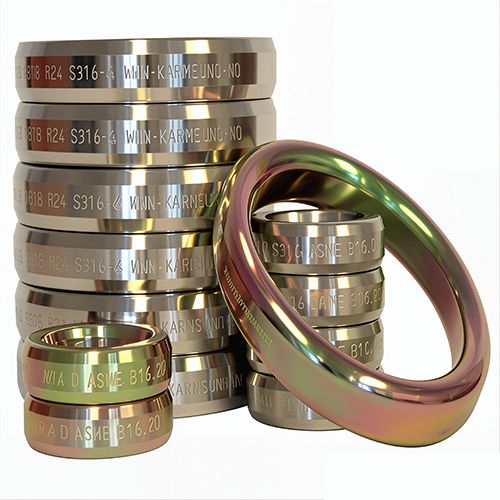
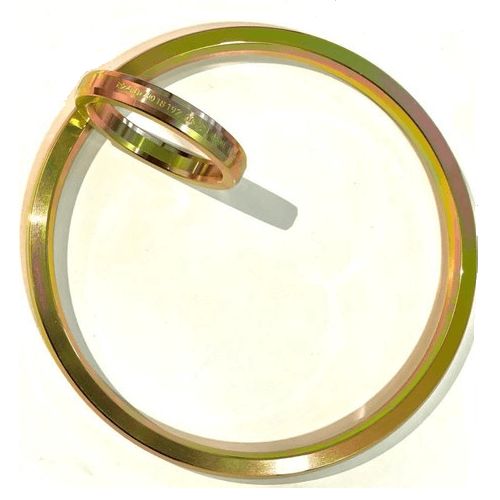
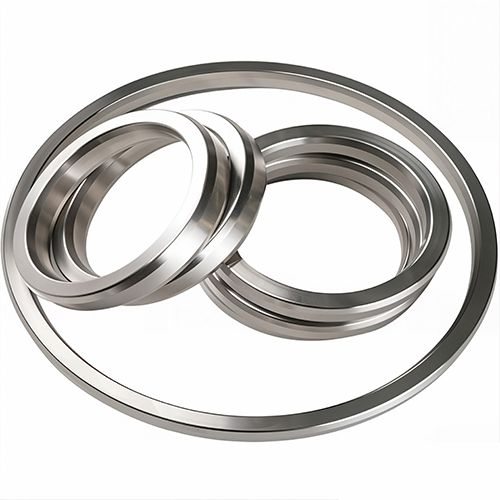
Unlike flat gaskets or spiral wounds, the octagonal ring joint gasket is a solid metal ring designed to be compressed into a matching groove in flanges, creating a rugged, pressure-energized seal. Its unique octagonal cross-section provides superior sealing performance compared to the older oval ring design, offering a larger contact area and more effective sealing at both high and low pressures.
**Key Advantages of Kaxite Sealing Octagonal Ring Joint Gaskets:**
* **Exceptional Leak Tightness:** Creates a metal-to-metal seal that is virtually leak-proof, essential for containing hazardous, toxic, or expensive fluids.
* **High Pressure and Temperature Rating:** Engineered to perform reliably in services exceeding 15,000 psi and temperatures from cryogenic levels up to 1000°F (538°C) and beyond, depending on material.
* **Pressure Energized:** The internal pressure of the system further forces the gasket's legs against the flange grooves, enhancing the seal as pressure increases.
* **Reusability:** Unlike many gasket types, a properly installed and undamaged octagonal ring can often be reused, providing long-term value.
* **Wide Material Selection:** Available in a range of metals to suit specific corrosion, temperature, and pressure requirements.
* **Standard Compliance:** Manufactured to meet or exceed all relevant international standards, including ASME B16.20, API 6A, and ISO 10423.
### Detailed Product Parameters and Specifications
At Kaxite Sealing, every octagonal ring joint gasket is produced with meticulous attention to detail. Our product range covers all standard ring numbers (R-series) and corresponding flange types.
**Standard Materials & Specifications:**
The following table outlines the most common materials we offer, along with their key properties and typical applications.
| Material Grade (UNS) | Common Name | Hardness (HB) | Temperature Range | Primary Characteristics & Typical Applications |
| :--- | :--- | :--- | :--- | :--- |
| **Soft Iron (F911)** | Soft Iron | 90 Max | Up to 800°F (427°C) | Excellent ductility, seals easily. General refinery service. |
| **Low Carbon Steel** | Low Carbon Steel | 120-180 | Up to 1000°F (538°C) | Good strength, economical. Common in oil and gas pipelines. |
| **316 Stainless Steel (S31600)** | 316 SS | 160-220 | Up to 1500°F (816°C) | Excellent corrosion resistance. Chemical, pharmaceutical, marine. |
| **321 Stainless Steel (S32100)** | 321 SS | 160-220 | Up to 1500°F (816°C) | Stabilized against sensitization. High-temp petrochemical. |
| **347 Stainless Steel (S34700)** | 347 SS | 160-220 | Up to 1500°F (816°C) | Superior high-temperature strength. Power generation, heaters. |
| **Alloy 20 (N08020)** | Carpenter 20 | 150-210 | Up to 1000°F (538°C) | Outstanding resistance to sulfuric acid. Chemical processing. |
| **Monel 400 (N04400)** | Monel | 120-250 | Up to 1200°F (649°C) | Superior resistance to seawater and acids. Offshore, marine. |
| **Inconel 600 (N06600)** | Inconel | 150-220 | Up to 2000°F (1093°C) | Oxidation resistance at very high temps. Furnaces, thermal processing. |
| **Titanium (R50400)** | Grade 2 Ti | 120-200 | Up to 800°F (427°C) | High strength-to-weight, excellent corrosion resistance. Aerospace, CPI. |
**Dimensional Standards (ASME B16.20 / API 6A):**
Octagonal ring joint gaskets are defined by "Ring Numbers" (e.g., R20, R37, R45, R50, etc.). Each number corresponds to a specific set of dimensions for the ring and the mating flange groove. Critical dimensions include:
* **Ring Number (R#):** The identifying number for the gasket and groove.
* **Outside Diameter (O.D.):** The overall outer measurement of the ring.
* **Inside Diameter (I.D.):** The overall inner measurement of the ring.
* **Width (W):** The width of the octagonal cross-section.
* **Pitch Diameter (P):** The diameter at the contact points of the seal.
* **Theoretical Weight:** The calculated weight of the ring for a given material.
**Example Dimension Table for Select Ring Numbers:**
| Ring Number | Pitch Diameter (P) | Width (W) | Approx. Weight - Soft Iron (lbs) |
| :--- | :--- | :--- | :--- |
| **R20** | 2.516 in | 0.344 in | 0.25 |
| **R37** | 5.109 in | 0.656 in | 2.00 |
| **R45** | 6.549 in | 0.656 in | 2.80 |
| **R50** | 8.000 in | 0.750 in | 4.50 |
| **R64** | 11.422 in | 0.875 in | 9.50 |
| **R76** | 14.672 in | 0.875 in | 12.50 |
*Note: This is a simplified sample. Kaxite Sealing provides full dimensional datasheets for all available ring numbers upon request.*
### Kaxite Sealing's Manufacturing Excellence
Our commitment to quality is embedded in our manufacturing process:
1. **Material Sourcing:** We source raw materials only from certified mills, with full traceability and material test reports (MTRs) for every batch.
2. **Precision Machining:** State-of-the-art CNC lathes and machining centers ensure every dimension is held to tolerances far stricter than industry standards.
3. **Heat Treatment:** Where required, precise heat treatment processes are applied to achieve optimal material hardness and stress relief.
4. **Surface Finish:** A smooth, uniform surface finish is critical for sealing. Our finishing process eliminates tool marks and imperfections.
5. **100% Dimensional Inspection:** Every single Kaxite Sealing gasket is measured using calibrated micrometers, ring gauges, and optical comparators.
6. **Visual & NDT Inspection:** Final visual inspection is followed by non-destructive testing (like dye penetrant) for critical service gaskets to ensure no defects are present.
7. **Certification & Packaging:** Each gasket is marked with material grade and ring number, packaged to prevent damage, and shipped with relevant certification.
### Octagonal Ring Joint Gaskets: Frequently Asked Questions (FAQ)
**What is the difference between an Octagonal and an Oval Ring Joint Gasket?**
The primary difference is in the cross-section. Oval rings have a rounded, elliptical shape, while octagonal rings have an eight-sided profile. The octagonal design provides two distinct sealing contact surfaces (on the top and bottom corners) compared to the oval's single, rounded contact line. This gives octagonal rings better sealing performance across a wider pressure range, especially at lower pressures, and makes them less prone to rolling in the groove during installation.
**How do I select the correct material for my application?**
Material selection depends on three main factors: the fluid chemistry (corrosiveness), the operating temperature, and the pressure. For example, standard carbon steel is suitable for non-corrosive hydrocarbons at high pressure, while Inconel is chosen for extremely high-temperature oxidizing atmospheres. Consulting your system's Piping & Instrumentation Diagram (P&ID) specs, process engineers, or Kaxite Sealing's technical team is crucial for correct selection.
**Can I use an Octagonal Ring Gasket in an Oval Ring Groove (or vice versa)?**
No, this is absolutely not recommended and is a common cause of seal failure. Octagonal rings are designed specifically for octagonal grooves (Type R). Using an octagonal ring in an oval groove (Type Rx) will result in incorrect contact, inadequate sealing, and potential damage to both the ring and the flange. Always match the ring profile to the flange groove profile.
**What is the proper installation procedure for an Octagonal Ring Joint Gasket?**
Correct installation is vital. The gasket should be placed *carefully* into the clean flange groove without dropping. It should sit evenly. The mating flange is then aligned and brought together. Bolts should be tightened in a star-pattern cross-bolting sequence to ensure even compression. Always follow the flange manufacturer's or API/ASME recommended bolt torquing procedures. Never lubricate the sealing surfaces of the ring or groove.
**Are these gaskets reusable?**
A Kaxite Sealing octagonal ring joint gasket can often be reused if it has been properly installed, the system was not subjected to excessive temperature cycling that might have caused distortion, and upon disassembly, the ring shows no signs of nicks, galling, flattening, or corrosion. A thorough visual inspection is mandatory before considering reuse.
**How do I identify the Ring Number and material of a gasket I need to replace?**
The ring number (e.g., R37) is often stamped on the outer face of the ring. The material may be marked with a standard abbreviation (e.g., CS for Carbon Steel, SS for Stainless). If markings are unclear, the critical measurements are the Pitch Diameter (P) and the Width (W). Measuring these accurately and consulting an ASME B16.20 dimension table will identify the ring number. Our technical team can assist with identification from measurements or photos.
**What standards govern the manufacture of these gaskets?**
The primary standard in the US is ASME B16.20, which covers metallic gaskets for pipe flanges. For wellhead and christmas tree equipment in the oil & gas industry, API 6A is the governing specification. ISO 10423 is the international (ISO) equivalent. Kaxite Sealing gaskets are manufactured in full compliance with these standards.
**Why should I choose Kaxite Sealing for my octagonal ring joint gasket requirements?**
Kaxite Sealing brings unparalleled expertise to the table. We combine decades of metallurgical knowledge with precision manufacturing. Our focus is not just on making a gasket, but on providing a sealing solution that guarantees safety, reliability, and longevity for your operation. From stringent quality control and full material traceability to expert technical support, we ensure you get the right part, correctly specified, and delivered with integrity.