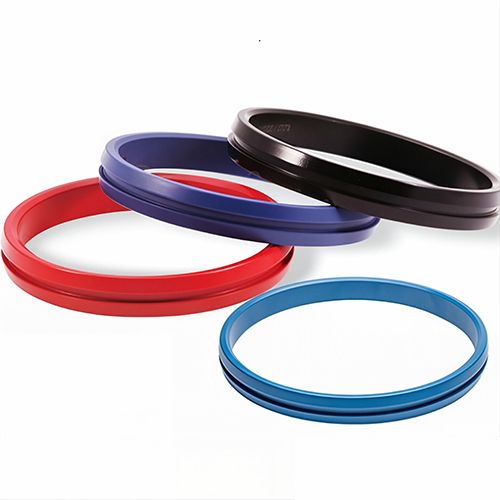
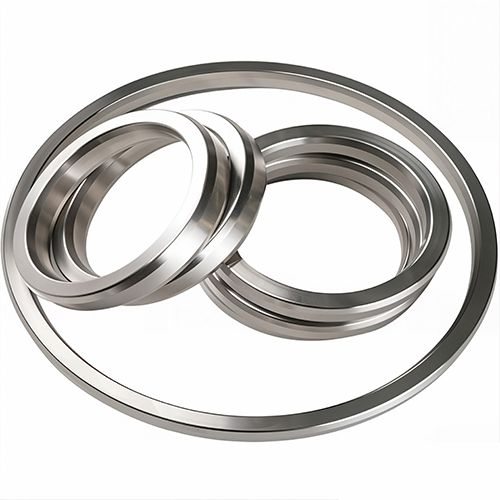
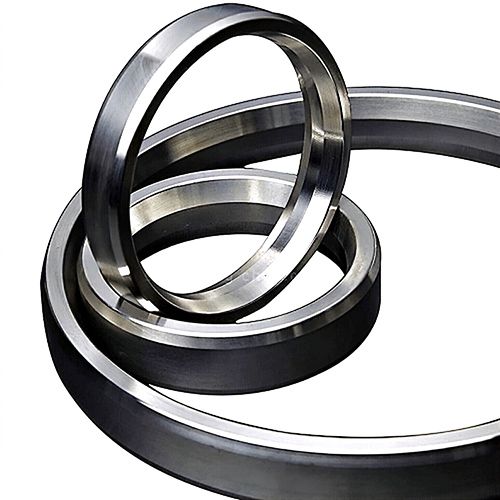
IX Seal Ring Joint Gaskets are engineered sealing solutions designed for extreme service conditions in critical industries such as oil and gas, petrochemical, power generation, and high-pressure processing. These specialized gaskets form a robust, leak-free seal in high-pressure, high-temperature flanged connections, typically within ring-type joint (RTJ) grooves on flanges, valves, pipe fittings, and wellhead equipment. The core principle involves the controlled deformation of a metal ring into a matching groove under bolt load, creating a highly effective pressure seal through metal-to-metal contact. At Kaxite Sealing, we manufacture premium IX Seal Ring Joint Gaskets using advanced metallurgy and precision machining to ensure reliability, safety, and longevity in the most demanding applications. This guide details their specifications, types, and best practices for selection and installation.
**Core Design and Operating Principle**
The effectiveness of an IX Seal Ring Joint Gasket stems from its unique geometry. The ring features an oval or octagonal cross-section. When the flange bolts are tightened, the ring is compressed into the V-shaped or trapezoidal groove of the RTJ flange. This compression causes the softer ring material to flow and conform perfectly to the harder flange groove surfaces, creating two continuous lines of contact. This metal-to-metal seal is exceptionally resistant to high internal pressures, thermal cycling, and corrosive media, making it superior to many non-metallic gasket types in severe service.
**Primary Types of IX Seal Ring Joint Gaskets**
IX gaskets are categorized primarily by their cross-sectional shape and corresponding flange groove design.
1. **Oval Ring Gaskets (R Series):** These have an oval cross-section and are designed to fit into round-bottomed, trapezoidal grooves (e.g., R-style flanges). Upon compression, the oval ring flattens to seal against the angled sides of the groove. They require higher seating stress compared to octagonal rings.
2. **Octagonal Ring Gaskets (RX & BX Series):** These feature an octagonal cross-section and seat into flat-bottomed, trapezoidal grooves. The octagonal shape provides a larger sealing surface area and requires lower seating stress for an effective seal, offering advantages in ease of installation and performance.
* **RX Ring Gaskets:** A modified octagonal ring designed for higher pressures. It can sometimes be used as a replacement for oval rings in R grooves under specific conditions, but this requires careful engineering review.
* **BX Ring Gaskets:** These are pressure-energized, octagonal rings used in proprietary flange connections, most commonly in wellhead, Christmas tree, and manifold systems (e.g., API 6A type). They are designed for extremely high pressures.
**Key Material Specifications**
The material selection for IX Seal Ring Joint Gaskets is critical for performance. Kaxite Sealing offers a comprehensive range of materials to suit various pressure, temperature, and corrosive environments.
| Material Grade | Common Designation | Typical Hardness (Brinell HB) | Temperature Range (Approx.) | Key Characteristics & Common Applications |
| :--- | :--- | :--- | :--- | :--- |
| Soft Iron | AISI 1006-1010 | 90 Max | -20°F to 800°F (-29°C to 427°C) | Excellent ductility for easy sealing. General service for non-corrosive fluids like oil, gas, water, steam. |
| Low Carbon Steel | AISI 1020 | 120 Max | -20°F to 800°F (-29°C to 427°C) | Higher strength than soft iron. Common for refinery and process industry applications. |
| 316 Stainless Steel | AISI 316 | 160 Max | -450°F to 1500°F (-268°C to 816°C) | Excellent corrosion resistance to a wide range of chemicals, acids, and marine environments. Standard for corrosive service. |
| 304 Stainless Steel | AISI 304 | 160 Max | -425°F to 1500°F (-254°C to 816°C) | Good general corrosion resistance. Suitable for many chemical and food processing applications. |
| Alloy 20 | UNS N08020 | 190 Max | Up to 1000°F (538°C) | Superior resistance to sulfuric acid and other aggressive chemicals. Used in severe chemical processing. |
| Monel 400 | UNS N04400 | 175 Max | Up to 1000°F (538°C) | High strength and excellent resistance to seawater, hydrofluoric acid, and alkalis. |
| Inconel 600 | UNS N06600 | 210 Max | Up to 2100°F (1149°C) | Outstanding oxidation and high-temperature corrosion resistance. Ideal for high-heat applications like furnaces and thermal reactors. |
| Duplex Stainless Steel | S31803 / S32205 | 290 Max | Up to 600°F (316°C) | High strength and excellent resistance to chloride stress corrosion cracking. Used in offshore and subsea applications. |
| Titanium | Grade 2 | 215 Max | Up to 600°F (316°C) | Exceptional strength-to-weight ratio and corrosion resistance, especially in chlorides and oxidizing media. |
**Detailed Product Parameters and Dimensions**
IX Seal Ring Joint Gaskets must conform to precise dimensional standards to ensure proper fit and seal. The primary standards are ASME B16.20 (for pipeline flanges) and API 6A (for wellhead equipment). Key dimensions include:
* **Nominal Pipe Size (NPS):** The corresponding flange size (e.g., 2", 4", 12").
* **Pressure Class:** The pressure-temperature rating of the flange (e.g., Class 150, 300, 600, 900, 1500, 2500).
* **Ring Number (R# or BX#):** A specific identifier that defines the ring's cross-section and dimensions (e.g., R24, R45, BX153).
* **Actual Dimensions:**
* **Outside Diameter (O.D.)**
* **Inside Diameter (I.D.)**
* **Width/Thickness (P)**
* **Height (N)**
**Selection Guide and Best Practices**
Choosing the correct IX Seal Ring Joint Gasket involves several critical factors:
1. **Flange Specification:** Always match the gasket to the flange specification. Identify the flange standard (ASME B16.5, API 6A, etc.), pressure class, NPS, and groove type (R, RX, BX). Using an incorrect ring type is a primary cause of leakage and failure.
2. **Service Conditions:**
* **Pressure & Temperature:** Select a material with adequate yield strength and corrosion resistance at the operating temperature. Higher classes require harder materials.
* **Media Compatibility:** The gasket material must be chemically inert to the fluid being sealed to prevent corrosion and degradation.
3. **Material Selection:** Refer to the material table above. The ring material should generally be softer than the flange material to allow for proper deformation and sealing. Kaxite Sealing engineers can assist in material selection for complex services.
4. **Surface Finish:** The sealing surfaces of the flange grooves must be clean, undamaged, and have an appropriate finish (typically 63 to 125 microinches Ra) to allow proper ring bite and sealing.
**Installation and Handling Procedures**
Proper installation is paramount for a leak-free joint.
* **Inspection:** Before installation, inspect the new Kaxite Sealing ring for any dents, scratches, or material defects. Inspect the flange grooves for cleanliness, damage, or old gasket material. Clean grooves thoroughly.
* **Lubrication:** Lightly lubricate the ring and flange groove with a suitable high-temperature anti-seize compound. This prevents galling (cold welding) and ensures even compression.
* **Positioning:** Carefully place the ring into the groove. Do not drop it.
* **Bolt Tightening:** Follow a cross-pattern bolting procedure (torque sequence) as specified by the flange standard or equipment manufacturer. Tighten bolts gradually and evenly in multiple passes to the final recommended torque value to compress the ring uniformly.
**IX Seal Ring Joint Gaskets – Frequently Asked Questions (FAQ)**
**Q: What is the main difference between Oval (R) and Octagonal (RX/BX) ring gaskets?**
A: The key difference is in their cross-section and sealing mechanics. Oval rings (R) seat into round-bottom grooves and require higher bolt load to deform and seal. Octagonal rings (RX/BX) seat into flat-bottom grooves, provide more initial contact area, and seal effectively with relatively lower bolt load, reducing the risk of flange over-stress. RX and BX rings are designed for higher pressure ratings than standard R rings.
**Q: Can an Octagonal (RX) ring be used in a flange groove designed for an Oval (R) ring?**
A: This is a common point of confusion. While sometimes done in the field, it is not generally recommended without explicit engineering approval. An RX ring in an R groove may not seat properly, leading to potential leakage or ring extrusion. Always consult the original flange specifications or a Kaxite Sealing engineer before considering a substitution.
**Q: Are IX Seal Ring Joint Gaskets reusable?**
A: No, they are generally considered one-time-use components. During installation, the ring undergoes permanent plastic deformation to flow into the flange groove imperfections. Removing a used ring distorts its shape and compromises its sealing ability. Reusing an old ring significantly increases the risk of a leak.
**Q: How do I identify the correct ring number (e.g., R37, BX152) for my flanges?**
A: The ring number is typically stamped on the outer face of the flange near the RTJ groove. If not, you must identify the flange's Nominal Pipe Size (NPS), Pressure Class (e.g., 900#), and the relevant standard (ASME B16.5, API 6A). Cross-reference this data with dimensional tables from standards like ASME B16.20 or manufacturer catalogs from trusted suppliers like Kaxite Sealing.
**Q: What causes an RTJ gasket to leak, and how can it be prevented?**
A: Leaks can result from several factors: using the wrong ring type or material for the service; incorrect installation (uneven bolt torque, insufficient torque); damaged or corroded flange sealing surfaces; reusing a deformed ring; or thermal cycling that loosens bolts. Prevention involves correct selection, thorough inspection, proper cleaning, controlled installation with calibrated tools, and following recommended re-torquing procedures after heat cycles if specified.
**Q: What are the advantages of sourcing IX Seal Ring Joint Gaskets from Kaxite Sealing?**
A: Kaxite Sealing provides gaskets manufactured with rigorous quality control from traceable raw materials. Our rings are precision-machined to exacting dimensional tolerances, ensuring a perfect fit and reliable seal. We offer full material certification (MTRs) and support with technical expertise for complex application selection. Our commitment is to deliver sealing solutions that enhance operational safety and reduce costly downtime in critical infrastructure.