English


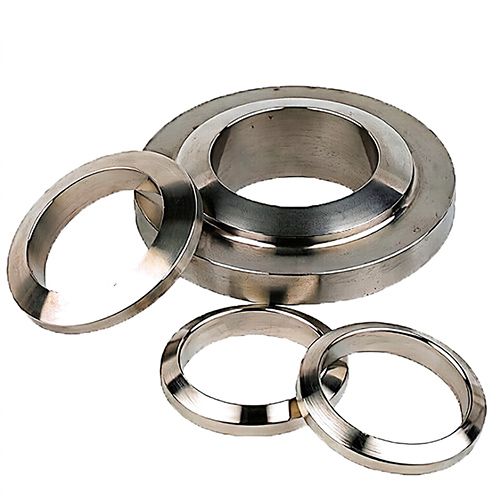
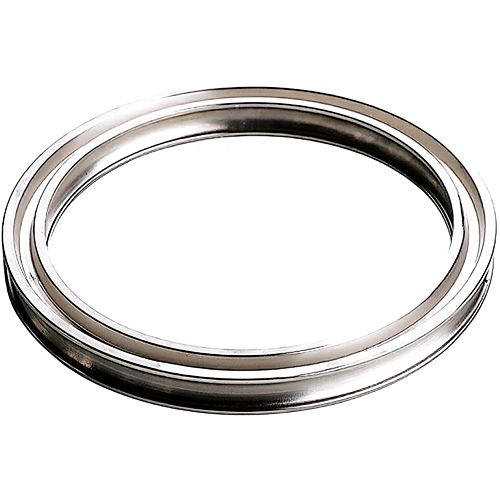
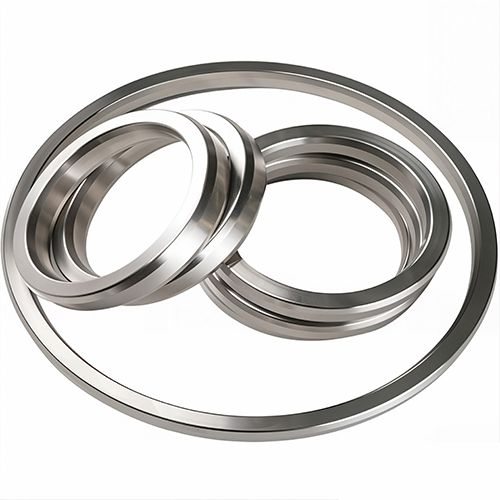
In the demanding world of industrial piping and pressure vessel systems, achieving a perfect, leak-free seal under extreme conditions is not just a goal—it's a necessity for safety, efficiency, and environmental protection. Among the various sealing solutions available, the Lens Ring Type Joint Gasket stands out as a premier choice for high-pressure, high-temperature applications. This specialized metallic sealing ring is engineered to provide unmatched performance where standard gaskets would fail. Its unique design, resembling a lens in cross-section, creates a highly effective line contact seal when compressed between the matching grooves of flanges. At Kaxite Sealing, we have mastered the manufacturing of these critical components, ensuring they meet the most rigorous international standards for industries such as oil & gas, petrochemical, power generation, and aerospace.
The superior performance of Kaxite Sealing Lens Ring Gaskets stems from their intelligent design and precise engineering. Unlike flat gaskets that seal across a wide surface area, the lens ring utilizes a principle of controlled, high-stress line contact.
Selecting the correct lens ring gasket requires careful consideration of operating conditions, media, and flange specifications. Kaxite Sealing offers a comprehensive range of options to suit every demanding application.
| Nominal Pipe Size (NPS) | Ring Number (R) | Outside Diameter (mm) | Inside Diameter (mm) | Thickness (mm) | Approx. Weight (kg) |
|---|---|---|---|---|---|
| 1" | R20 | 79.4 | 47.6 | 11.1 | 0.28 |
| 2" | R22 | 98.4 | 66.7 | 12.7 | 0.48 |
| 4" | R26 | 136.5 | 104.8 | 15.9 | 1.05 |
| 6" | R30 | 171.4 | 139.7 | 17.5 | 1.85 |
| 10" | R38 | 254.0 | 222.2 | 22.2 | 4.90 |
| Material Grade | ASTM Specification | Hardness (HB) | Max Temp. (°C) | Key Applications & Media |
|---|---|---|---|---|
| Soft Iron | AISI 1006-1010 | 90 Max | 540 | Steam, oil, general hydrocarbon services. |
| 304 Stainless Steel | A182 F304 | 160-210 | 800 | Corrosive services, acids, food & pharma. |
| 316 Stainless Steel | A182 F316 | 160-210 | 800 | Highly corrosive chlorides and acids. |
| Alloy 20 | B462 / B463 | 150-220 | 400 | Sulfuric acid, chemical processing. |
| Inconel 600 | B166 | 150-220 | 1100 | High-temperature furnaces, nuclear, aerospace. |
| Duplex 2205 | A182 F51 | 290 Max | 300 | Offshore, seawater, high chloride environments. |
Kaxite Sealing also manufactures lens rings from other exotic alloys like Monel, Hastelloy, and Titanium upon request. All our gaskets undergo stringent quality control, including dimensional verification, material certification (MTC), and surface finish inspection to ensure a perfect seal every time.
The exceptional performance of a lens ring gasket is fully realized only with correct installation. Incorrect handling can compromise the seal. Follow these essential steps for optimal results:
Q: What is the main difference between a Lens Ring Gasket and a standard Ring Type Joint (RTJ) gasket?
A: While both are metallic ring gaskets for high-pressure services, their sealing mechanisms differ. A standard RTJ gasket (oval or octagonal) seals through surface contact within the flange groove. A lens ring gasket seals through precise line contact between its convex spherical surfaces and the angled walls of the flange grooves. This line contact creates a higher sealing stress with less bolt load, offering superior performance in cyclic and high-temperature conditions.
Q: Can Kaxite Sealing Lens Ring Gaskets be used with standard RTJ flanges?
A: No, they are not interchangeable. Lens ring gaskets require specific flanges machined with a matching groove profile designed for the lens geometry. Using a lens ring in a standard RTJ groove, or vice versa, will result in seal failure. Always verify the flange standard (e.g., ASME B16.5, API 6A Type B) and groove designation (e.g., Type R) are compatible with the gasket.
Q: How do I determine the correct material grade for my application?
A: Material selection depends on three primary factors: the fluid media (corrosiveness), operating temperature, and pressure. Consult your system's engineering specifications or a Kaxite Sealing technical expert. We require details such as fluid composition, concentration, temperature range, and pressure class to recommend the optimal material, balancing performance, longevity, and cost.
Q: Are these gaskets reusable, and what factors affect reusability?
A: Yes, Kaxite Sealing Lens Ring Gaskets are designed for potential reuse, which is a significant operational advantage. Reusability depends on several factors: the material's ductility, the number of previous compression cycles, whether the system experienced extreme temperature excursions, and if the gasket surfaces remain free of scratches or deformation. Always perform a thorough visual and dimensional inspection before reusing any metallic gasket.
Q: What are the consequences of under-torquing or over-torquing the flange bolts?
A: Both are detrimental. Under-torquing fails to generate sufficient load to deform the lens ring and create the necessary line contact seal, leading to immediate or eventual leakage. Over-torquing can over-stress the gasket, causing excessive deformation (flattening), damaging the flange grooves, or even leading to bolt failure. Always follow the manufacturer's or industry-standard torque tables based on bolt size, grade, and lubrication.
Q: Does Kaxite Sealing provide custom-sized or non-standard lens ring gaskets?
A: Absolutely. While we stock a wide range of standard sizes per ASME and API specifications, our engineering team specializes in designing and manufacturing custom lens ring gaskets for unique applications. This includes special sizes, non-standard materials, and proprietary configurations for OEM equipment. Contact our technical sales department with your drawings and specifications for a quote.
The robustness of Kaxite Sealing Lens Ring Gaskets makes them indispensable in numerous critical sectors: