English


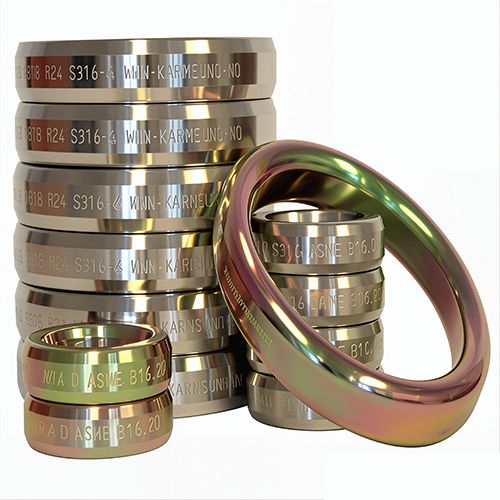
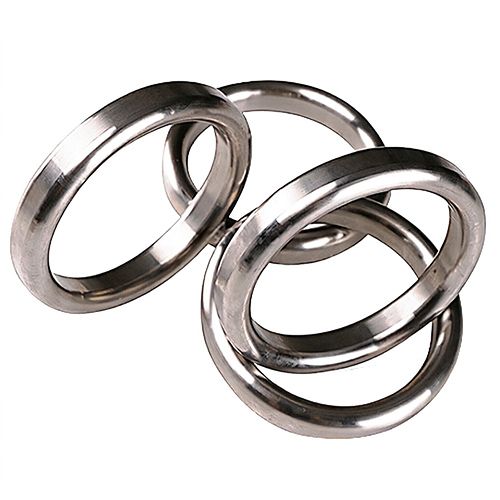
Picture a procurement engineer at a gas processing plant in the Gulf of Mexico. The flange specification says “RTJ gasket, super duplex stainless steel,” but the vendor asks: “What is the difference between F55 and F53 ring type joint gaskets?” This is one of the most common questions in high-pressure oil and gas sealing. F55 and F53 are both super duplex stainless steel grades listed in API 6A and ASME B16.20, but they are not identical. F55 corresponds to UNS S32760 and contains tungsten and copper. F53 corresponds to UNS S32750 and relies on a slightly higher molybdenum content. In chloride-rich produced water, sour gas, or high-temperature flange service, choosing the wrong grade can cause pitting, crevice corrosion, groove damage, or gasket blowout. Many buyers only compare price, but the real question is whether the material can survive the operating environment for years without leaking. At Ningbo Kaxite Sealing Materials Co., Ltd., we help purchasing teams match F55 or F53 RTJ gaskets to the actual pressure class, temperature, and media conditions. This guide explains the chemical, mechanical, and corrosion differences, shows failure scenarios, and gives you clear procurement rules. By the end, you will know exactly when F55 is worth the extra cost and when F53 is a safe, cost-effective option.
Article Outline
Pain point scenario: A procurement engineer receives two quotations for ring type joint gaskets. One says F55, the other says F53. Both are called “super duplex stainless steel,” but the chemical requirements differ enough to affect service life in aggressive media. Without a clear comparison, the buyer risks ordering the wrong alloy for the flange.
Solution: F55 is the UNS S32760 grade with deliberate additions of tungsten and copper to enhance resistance to acidic and chloride environments. F53 is the UNS S32750 grade with a slightly higher molybdenum range and no tungsten or copper. Both have similar chromium and nickel ranges, so they look similar on paper, but the minor elements change localized corrosion behavior. Ningbo Kaxite Sealing Materials Co., Ltd. supplies both F55 and F53 RTJ gaskets with full mill certificates to EN 10204 3.1, so buyers do not have to guess.
| Element / Property | F55 (UNS S32760) | F53 (UNS S32750) |
|---|---|---|
| Chromium | 24.0–26.0% | 24.0–26.0% |
| Nickel | 6.0–8.0% | 6.0–8.0% |
| Molybdenum | 3.0–4.0% | 3.0–5.0% |
| Nitrogen | 0.20–0.30% | 0.24–0.32% |
| Tungsten | 0.50–1.00% | — |
| Copper | 0.50–1.00% | — |
| Typical PREN range | 40–45 | 40–42 |
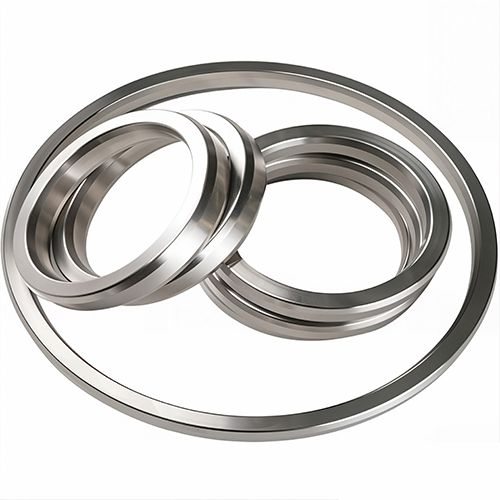
Pain point scenario: An offshore platform in Southeast Asia used F53 RTJ gaskets in a seawater injection pump. After 18 months, inspection found crevice corrosion at the ring contact face because the produced water had 60,000 ppm chlorides and temperature spikes to 95°C. The failed gasket caused unplanned downtime and flange surface repair.
Solution: F55 contains tungsten and copper, which help stabilize the passive film and improve crevice corrosion resistance, especially in hot chlorides and low-pH conditions. F53 is still a high-performance alloy, but its safety margin in hot, high-chloride service is narrower. Ningbo Kaxite Sealing Materials Co., Ltd. can provide F55 rings with passivation and pickling treatment to further reduce the risk of localized attack before installation.
| Corrosion condition | F55 | F53 |
|---|---|---|
| Seawater at 25°C | Excellent | Excellent |
| Hot chloride above 80°C | Very good | Good |
| Acidic chloride / low pH | Better due to Cu and W | Good |
| Crevice corrosion risk | Lower | Moderate |
Pain point scenario: A gas processing plant in the Middle East experienced ring groove deformation with a duplex gasket at 15,000 psi. The buyer was unsure if F53 had enough strength or whether F55 would be safer under high bolt load and thermal cycling.
Solution: Both F55 and F53 have high yield strength and excellent resistance to galling, but F55 sometimes offers a slightly higher work-hardening rate and better wear resistance in high-contact-stress RTJ grooves. Hardness control is critical because an overly hard ring can damage the flange groove, while an overly soft ring may not seal at high pressure. Ningbo Kaxite Sealing Materials Co., Ltd. hardness-tests every RTJ gasket batch and can supply rings in the hardness range required by API 6A.
| Mechanical property | F55 | F53 |
|---|---|---|
| Minimum yield strength | 550 MPa | 550 MPa |
| Tensile strength | 750–1000 MPa | 800–1000 MPa |
| Minimum elongation | 25% | 25% |
| Typical hardness | ≤32 HRC | ≤32 HRC |
| High-pressure sealing | Excellent | Excellent |
Pain point scenario: A sour gas field with H2S partial pressure of 0.5 psi and 130°C operating temperature specified F53. During a design review, the manufacturer’s datasheet showed reduced pitting resistance above 100°C in high-chloride brine, creating uncertainty about long-term sealing performance.
Solution: F55 is often selected for sour, high-temperature, high-chloride service because of its improved localized corrosion resistance. Both F55 and F53 are accepted under NACE MR0175/ISO 15156 for sour service, but F55 provides a larger safety margin when H2S and hot chlorides combine. Ningbo Kaxite Sealing Materials Co., Ltd. can review your ISO 15156 documentation and recommend the safer grade without over-specifying cost.
| Service condition | F55 | F53 |
|---|---|---|
| Maximum continuous temperature in seawater | 150°C+ | 130°C |
| Sour service under NACE MR0175 | Accepted | Accepted |
| High chloride plus H2S | Preferred | Suitable with limits |
| Thermal cycling resistance | Good | Good |
Pain point scenario: A purchasing team only compared initial price and chose F53. Later, a change in process conditions meant the gasket material had to be upgraded to F55, causing a six-week delay and additional machining costs. The short-term saving turned into a project risk.
Solution: Evaluate total cost of ownership, not just unit price. F55 may cost 10–20% more than F53, but it can reduce corrosion failure risk, unplanned shutdowns, and flange repair costs in severe service. Ningbo Kaxite Sealing Materials Co., Ltd. stocks semi-finished rings for both F55 and F53 in common R, RX, and BX sizes, and can machine custom ring joint profiles quickly.
| Procurement factor | F55 | F53 |
|---|---|---|
| Relative raw material cost | Higher | Moderate |
| Typical lead time | 3–6 weeks | 2–5 weeks |
| Availability from stock | Good | Very good |
| Failure risk in severe service | Lower | Moderate |
The main chemical difference is that F55 contains tungsten and copper, while F53 does not. F55 is UNS S32760 and typically has 0.50–1.00% tungsten and 0.50–1.00% copper. F53 is UNS S32750 and generally has a slightly higher molybdenum content, often in the 3.0–5.0% range. These small differences have a large impact on localized corrosion resistance in chloride and acidic environments.
Both F55 and F53 are listed in NACE MR0175/ISO 15156 for sour service. However, F55 is usually preferred when high chloride levels, elevated temperature, and H2S are present at the same time. F53 remains a safe and cost-effective choice for milder sour conditions or sweet service with moderate chlorides. Ningbo Kaxite Sealing Materials Co., Ltd. can provide material test reports for both grades to support your material selection.
Pain point scenario: You need a clear rule for your next purchase order without spending hours comparing datasheets.
Solution: Use the following decision table based on operating conditions. Always verify API 6A or ASME B16.20 dimensions, material certificates, hardness, and marking before release. For aggressive offshore, sour gas, or hot produced water, choose F55. For general sweet hydrocarbon service with moderate chlorides and lower temperatures, F53 is often sufficient and more cost-effective.
| Operating condition | Recommended grade | Reason |
|---|---|---|
| Sweet gas, <10,000 ppm Cl, <80°C | F53 | Cost-effective, excellent general corrosion |
| Produced water, >40,000 ppm Cl, >100°C | F55 | Better crevice corrosion resistance |
| Sour gas with H2S, high chloride | F55 | Higher localized corrosion safety margin |
| General refinery hydrocarbon, moderate temperature | F53 or F55 | Both acceptable based on budget |
Ningbo Kaxite Sealing Materials Co., Ltd. is a specialized manufacturer and supplier of ring type joint gaskets, including F55, F53, 316L, Inconel 625, and other API 6A / ASME B16.20 profiles. We help oil and gas procurement teams solve material selection challenges with certified raw materials, full traceability, and fast global delivery from our Ningbo facility. Whether you need F55 or F53 rings in R, RX, or BX styles, our engineers can recommend the right material for your flange rating, temperature, and media. Visit our website at https://www.ring-joint-gaskets.net or send your drawings to [email protected] for a same-day quotation.
Charles, J., & Chauveau, E. (2011). Super duplex stainless steels: properties and industrial applications. Materials Science and Engineering A, 528(15), 5649–5656.
Gunn, R. N. (1997). Duplex Stainless Steels: Microstructure, Properties and Applications. Woodhead Publishing, Cambridge, UK.
Francis, R. (2000). The corrosion of superduplex stainless steel in seawater. Corrosion Science, 42(8), 1425–1440.
Olsson, J., & Snis, M. (2007). Duplex — A new generation of stainless steels for desalination plants. Desalination, 205(1–3), 104–113.
Tavares, S. S. M., Terra, V. H., & Neto, J. M. (2007). Influence of microstructure on the corrosion resistance of UNS S32750 super duplex stainless steel. Materials and Corrosion, 58(8), 594–599.
Machado, S. E., & Lacombe, P. (2005). UNS S32760 super duplex stainless steel for oil and gas production. Journal of Materials Engineering and Performance, 14(2), 234–240.
Zhang, W., Li, H., & Wang, J. (2015). Pitting corrosion behavior of UNS S32760 super duplex stainless steel in chloride solutions. Corrosion Engineering, Science and Technology, 50(4), 267–273.
Nilsson, J. O. (1992). Super duplex stainless steels. Materials Science and Technology, 8(8), 685–700.
American Petroleum Institute. (2018). API Standard 6A: Specification for Wellhead and Christmas Tree Equipment. 21st edition.
ASME. (2019). ASME B16.20: Metallic Gaskets for Pipe Flanges—Ring-Joint, Spiral-Wound, and Jacketed. American Society of Mechanical Engineers.
-