English


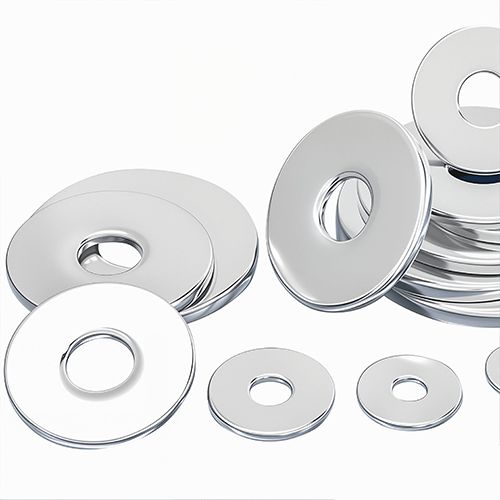
Picture this: a seawater lift pump flanged joint in a coastal chemical plant keeps weeping after startup. The maintenance team swaps in a flat Monel 400 gasket washer, assuming the alloy alone will stop the leak. Days later, a thin stream of brine still drips onto the grating. The washer is not the only variable. How should you install a Flat Monel 400 Gasket Washer to prevent leaks? The answer combines flange preparation, controlled compression, correct torque sequencing, and understanding how this nickel-copper alloy behaves under load. A flat Monel 400 gasket washer offers excellent resistance to seawater, hydrofluoric acid, and stress corrosion cracking, but those properties only translate into sealing performance when installation pressure is distributed evenly. Many leak failures trace back to three avoidable problems: a contaminated flange face, an off-center washer, or an uneven bolt load. If you source sealing products from Ningbo Kaxite Sealing Materials Co., Ltd., pairing the right component with proper installation method prevents costly rework and unplanned downtime. This guide walks through field-tested steps that procurement and maintenance teams can apply immediately.
Installation Guide Overview
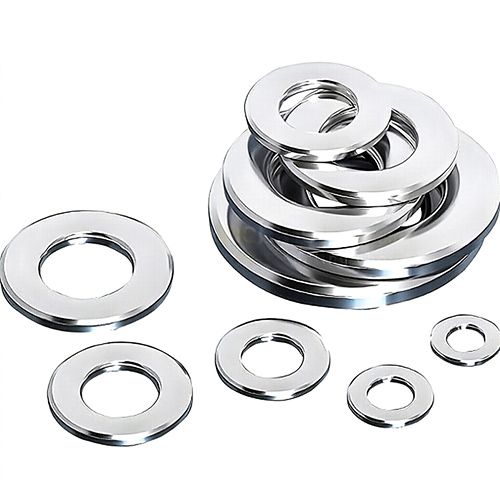
Monel 400 is a nickel-copper alloy with a unique combination of high strength, ductility, and resistance to marine and acidic media. In flat washer form, it is often selected for flange joints in heat exchangers, desalination trains, and offshore gas systems. However, a flat Monel 400 gasket washer is not a high-recovery sealing element like a spiral wound gasket. It relies on a smooth, rigid load path from bolt preload through the flange face into the washer surface. If the installer treats it as a universal soft gasket, over-compression or uneven loading can create a spiral leak path.
Procurement engineers frequently ask why a high-grade Monel 400 washer still allows seepage. The typical root cause is not the alloy, but the combination of surface finish, bolt pattern, and compression sequence. For example, a small radial scratch across the flange sealing face can act like a capillary channel under 40 bar operating pressure. The solution is to define installation parameters as carefully as the material specification.
| Monel 400 Property | Typical Value | Installation Impact |
|---|---|---|
| Density | 8.80 g/cm³ | High load transfer, avoid point loading |
| Tensile strength | 550–760 MPa | Allows high bolt preload without washer rupture |
| Hardness | 70–90 HRB | Requires controlled compression to avoid flange yielding |
| Maximum service temperature | About 538 °C | Stable sealing load over wide thermal range |
Before the first bolt is touched, the flange pair must be inspected under bright light. In one natural gas metering station, a technician reused a flange that had been dragged across a pipe rack. The resulting radial score was no deeper than 0.15 mm, but it created a persistent gas leak path past a new flat Monel 400 gasket washer. The repair cost more than the entire gasket order.
To avoid this scenario, follow a simple checklist. Clean both flange faces with a solvent such as isopropyl alcohol or acetone. Remove oil, grease, rust, old gasket fragments, and moisture. Check the sealing surface roughness with a comparator gauge. For a flat Monel 400 gasket washer, a roughness range of Ra 3.2–6.3 µm is commonly recommended. Rougher surfaces prevent gasket seating, while overly polished faces can reduce friction and allow extrusion or movement.
| Check Item | Recommended Requirement | Tool / Method |
|---|---|---|
| Flange face cleanliness | No oil, grease, rust, or old gasket residue | Visual + solvent wipe |
| Surface roughness | Ra 3.2–6.3 µm | Comparator gauge |
| Flatness deviation | Typically max 0.4 mm/m | Straight edge + feeler gauge |
| Washer dimensions | ID/OD must match flange contact area | Calibrated caliper |
Even with a clean flange and a dimensionally perfect flat Monel 400 gasket washer, poor bolt tightening remains a leading cause of seal failure. Imagine a 24-bolt flanged connection on a caustic transfer line. The maintenance crew tightens each bolt to final torque in a clockwise pattern. By the last bolt, the washer has shifted laterally and compacted unevenly, leaving one side with almost no residual gasket stress. Leakage appears within days.
The solution is to use a controlled, multi-pass star or cross-pattern sequence. First, lubricate threads and nut bearing faces with an approved anti-seize lubricant because Monel 400 can gall against stainless steel fasteners. Then snug the bolts in a star pattern to about 30% of the target torque. Repeat at 60%, then 80–100% on the final pass. Verify at least two full passes at the final target until no nut rotation is observed. For critical services, retorque after 24 hours of operation at ambient temperature.
| Bolt / Stud Size | Suggested Lubricated Torque Range | Tightening Pass |
|---|---|---|
| M16 | 60–85 N·m | 30% / 60% / 100% |
| M20 | 110–150 N·m | 30% / 60% / 100% |
| M24 | 190–250 N·m | 30% / 60% / 100% + final check pass |
Many leak investigations reveal the same installation errors repeating across plants. In an offshore produced water service, a contractor reused a flat Monel 400 gasket washer because the new order had not arrived. The reused washer had lost its original flatness after being pried from a raised face flange. The resulting leakage required an emergency shutdown. At Ningbo Kaxite Sealing Materials Co., Ltd., technical support teams often see this pattern: buyers focus on material grade but underestimate installation discipline.
Avoid these frequently observed mistakes. Do not use a damaged, bent, or previously compressed washer. Do not exceed the recommended torque because a flat Monel 400 washer can deform plastically and lose sealing contact. Do not ignore flange alignment; a misalignment greater than 1 mm can concentrate load on one side. Do not apply thread lubricant randomly; unlubricated bolts create large preload scatter. Finally, always record torque values and sequence to support future troubleshooting.
| Common Mistake | Leak Mechanism | Corrective Action |
|---|---|---|
| Reusing an old washer | Loss of flatness and work-hardened surface | Replace with new Monel 400 gasket washer |
| Single-pass full torque | Uneven compression and washer shifting | Use multi-pass star pattern |
| Ignoring flange alignment | Local stress peak and micro-channel | Align flanges within tolerance before tightening |
| No thread lubrication | High preload variation up to 40% | Lubricate threads and nut faces consistently |
Start by removing surface corrosion with a fine non-metallic abrasive pad or a soft wire brush, never a steel chisel. Inspect for pitting depth and remaining flatness. If pitting is deeper than about 0.1 mm across the sealing face, repair or replace the flange before installation. Clean the surface with acetone, dry it fully, then place the washer carefully on the flange ID. Tighten bolts in a star pattern at 30%, 60%, and 100% of the specified torque. After the first thermal cycle, retorque to restore seating stress. This sequence prevents corrosion-derived imperfections from becoming leak channels.
Bolt relaxation is normal after the first heating or pressurization cycle. To prevent leakage, use a controlled multi-pass method rather than one final torque pass. Lubricate threads and nut faces, align the flanges, and tighten in a cross-pattern to about 30%, then 60%, and finally 100% of target torque. After 24 hours or one full thermal cycle, perform a second final torque pass while the joint is at ambient temperature. This second pass restores the residual gasket stress lost to embedment and thermal relaxation. Document the final torque values so the plant has a repeatable baseline for the next maintenance interval.
Procurement teams choose Ningbo Kaxite Sealing Materials Co., Ltd. because the company combines alloy expertise with practical sealing product support. Instead of simply shipping a flat Monel 400 gasket washer, the engineering team helps customers confirm dimensions, hardness, and installation parameters for their specific flange class and media. This reduces the trial-and-error that often leads to leaks during commissioning. For buyers who need traceable material certificates, custom sizes, or fast turnaround on critical shutdown orders, Kaxite provides documented quality control and responsive technical communication.
Have you faced unexpected leaks after installing a flat Monel 400 gasket washer? Share your installation conditions or request a technical review from Ningbo Kaxite Sealing Materials Co., Ltd.. The company supplies precision-engineered Monel 400 flat gasket washers and sealing solutions that help maintenance teams prevent leaks across demanding applications. Contact the engineering team at [email protected] for detailed installation data, material certificates, or custom size support.
1. Abid, M., & Nash, D. H. (2004). Comparative study of the behaviour of conventional gasketed and compact non-gasketed flanged pipe joints under bolt up and operating conditions. International Journal of Pressure Vessels and Piping, 81(2), 135–147.
2. Nagy, A. (1997). Time dependent characteristics of gaskets at flange joints. International Journal of Pressure Vessels and Piping, 72(3), 219–229.
3. Fukuoka, T., & Takaki, T. (2001). Finite element simulation of bolt-up process of pipe flange connections with spiral wound gasket. Journal of Pressure Vessel Technology, 123(3), 371–378.
4. Bouzid, A. H., & Nechache, A. (2005). An analytical solution for evaluating gasket stress change in bolted flange connections subjected to high temperature loading. Journal of Pressure Vessel Technology, 127(3), 331–338.
5. Derenne, M., Marchand, L., & Payne, J. R. (2000). Elevated temperature characterization of flexible graphite sheet gaskets. Journal of Pressure Vessel Technology, 122(3), 330–335.
6. Kobayashi, T., & Hamano, K. (2004). The effects of gasket material on the sealing performance of pipe flange connections. Journal of Pressure Vessel Technology, 126(1), 135–140.
7. Zhu, L., Bouzid, A. H., & Hong, J. (2016). Numerical and experimental study of the behavior of a bolted flanged joint with a spiral wound gasket under bending loads. Journal of Pressure Vessel Technology, 138(6), 061201.
8. Chen, X., Chen, L., & Li, Y. (2015). Corrosion behavior of Monel 400 alloy in seawater. Journal of Materials Engineering and Performance, 24(10), 3877–3884.
9. Shoemaker, L. E., & Smith, G. D. (2006). A review of the corrosion and service performance of nickel-copper alloy 400 in marine and chemical environments. Corrosion, 62(3), 221–230.
10. Brown, W., & Marchand, L. (2004). Effect of surface finish on gasket performance. Journal of Pressure Vessel Technology, 126(1), 98–103.
-