English


In the demanding world of industrial sealing, reliability is non-negotiable. For over two decades, engineers and procurement specialists have trusted a specific solution for challenging flange connections under high pressure, temperature extremes, and variable media. That solution is the Spiral Wound Gasket. Its unique construction offers unparalleled flexibility and resilience, making it a cornerstone of safety and efficiency in pipelines, pressure vessels, and critical process equipment. At Kaxite Sealing, we have dedicated our expertise to engineering and manufacturing these gaskets to the most exacting international standards, ensuring a leak-free performance that our global clients depend on.
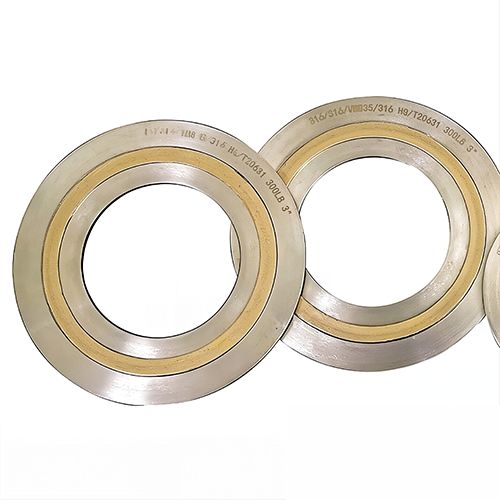
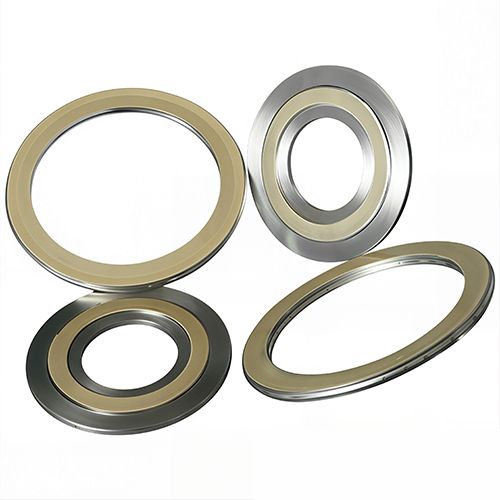
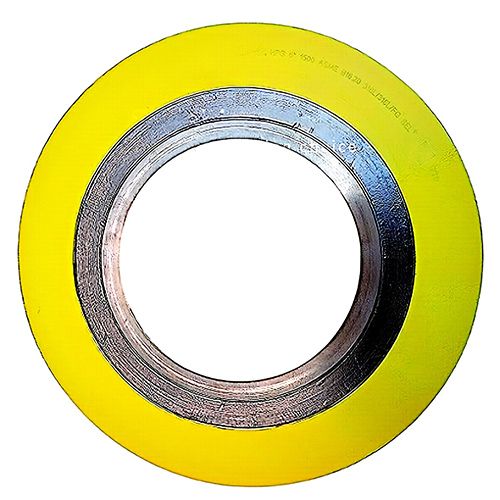
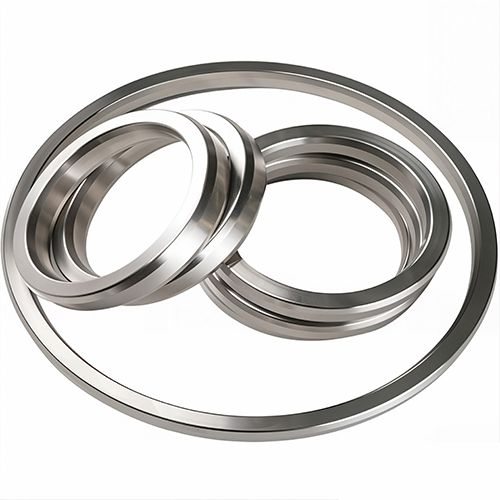
The fundamental strength of a spiral wound gasket lies in its composite, V-shaped design. It is fabricated by winding a pre-formed metal strip and a soft filler material (such as graphite, PTFE, or mica) around a central metal core. This winding process creates a series of concentric circles that function as multiple, independent sealing points. This structure provides a robust, spring-like action. When compressed between flanges, the gasket absorbs fluctuations in temperature and pressure, compensating for bolt relaxation, flange misalignment, and thermal cycling far more effectively than solid or homogeneous gaskets. This inherent adaptability is why spiral wound gaskets are specified for the most critical services across oil & gas, petrochemical, power generation, and pharmaceutical industries.
Selecting the correct spiral wound gasket requires careful consideration of several interdependent parameters. A mismatch in material, density, or size can compromise the entire sealing system. At Kaxite Sealing, we provide complete transparency and technical support to guide you to the optimal configuration for your application.
The performance envelope of the gasket is defined by its metallic winding strip and the non-metallic filler material. Standard combinations include:
The density, expressed in g/cm³, is a critical controlled parameter. Standard density for graphite-filled gaskets is typically 3.2 g/cm³, while PTFE-filled are around 2.8 g/cm³. Higher density gaskets (available on request) provide greater bolt load retention and resistance to creep relaxation for higher pressure applications. The number of windings per inch and the strip thickness are precisely calibrated to achieve the target density and required spring constant.
Kaxite Sealing spiral wound gaskets are manufactured to all major standards, including ASME B16.20, API 601, DIN, and JIS. They are available with or without inner and outer circumferential rings.
| Feature | Description | Function & Benefit |
|---|---|---|
| Inner Ring (I.R.) | A metal ring placed inside the windings. | Prevents inward buckling of the windings, protects filler from erosion by turbulent media, and provides a guide during installation. |
| Outer Ring (O.R.) or Centering Ring | A metal ring placed outside the windings. | Provides radial compression control, centers the gasket on the flange, adds handling strength, and minimizes over-compression. |
| Standard Types | Type A (Basic w/o rings), Type B (with O.R.), Type C (with I.R.), Type D (with I.R. & O.R.) | Allows for selection based on flange type (e.g., raised face, tongue-and-groove) and service conditions. |
The sealing capability is defined by its Pressure-Temperature (P/T) rating, which correlates with the ASME flange class ratings (150#, 300#, 600#, etc.). Kaxite gaskets are tested and rated to ensure they meet or exceed the required P/T values for their corresponding class, ensuring system integrity under design conditions.
Q: When should I choose a spiral wound gasket over other types like sheet gaskets or ring-type joints?
A: Spiral wound gaskets are the preferred choice for a wide range of medium to high-pressure applications, especially where thermal cycling, pressure fluctuations, or flange movement is expected. They are ideal for raised face (RF) and male-female (M/F) flanges. Choose them over soft cut gaskets when pressures exceed 150 psi and temperatures are above 200°C, or when the media is hazardous. Ring-Type Joints (RTJs) are used for significantly higher pressures (typically Class 900 and above) and are a different sealing philosophy involving metal-to-metal contact.
Q: How do I correctly specify a Kaxite Sealing spiral wound gasket for procurement?
A: A complete specification should include: 1) Flange Standard and Nominal Pipe Size (e.g., ASME B16.5, NPS 12), 2) Pressure Class (e.g., 300#), 3) Flange Face Type (e.g., Raised Face), 4) Required Gasket Type (A, B, C, or D), 5) Material Combination (e.g., SS316L/Flexible Graphite), 6) Density Requirement (if non-standard), and 7) Any relevant service details (media, temperature, pressure). Providing a flange drawing or data sheet is always recommended.
Q: What is the importance of the outer centering ring, and is it always necessary?
A: The outer ring is crucial for proper installation and performance. It ensures the gasket is perfectly centered within the bolt circle, preventing misalignment that could cause a leak path. It also acts as a compression stop, preventing the flanges from over-compressing and crushing the delicate windings. For raised face flanges, an outer ring (Type B or D) is almost always specified and is considered best practice. It may be omitted (Type A or C) for confined spaces like tongue-and-groove flanges.
Q: Can spiral wound gaskets be used in fire-safe applications?
A: Yes, absolutely. For applications requiring API 607/API 6FB or similar fire-safe certification, specific material combinations are used. The most common fire-safe configuration from Kaxite Sealing is a stainless steel winding (like 316) with a mica filler. In a fire event, the graphite in standard gaskets can burn out, but mica maintains its structural integrity at extremely high temperatures, ensuring a seal long enough for safe system shutdown.
Q: How do I handle, store, and install spiral wound gaskets to ensure optimal performance?
A: Handle with care to avoid bending or damaging the windings. Store them flat in a dry environment, away from moisture and contaminants. Before installation, thoroughly clean both flange faces. Never reuse a spiral wound gasket; they are designed for single compression. Apply a light, even film of lubricant or anti-seize to the flange faces (avoiding the filler material) to prevent galling. Use a criss-cross bolt tightening pattern in multiple incremental steps (e.g., 30%, 60%, 100% of final torque) to achieve uniform compression across the entire gasket face.
Q: What are the signs of gasket failure, and how can it be prevented?
A: The primary sign is leakage. Failure can stem from incorrect gasket selection (wrong material/P-T rating), improper installation (uneven bolt load, misalignment), flange damage, or excessive system conditions beyond design. Prevention starts with correct specification and sourcing from a qualified manufacturer like Kaxite Sealing. Ensure flanges are in good condition, parallel, and properly aligned. Follow strict controlled bolting procedures using calibrated tools. For cyclic services, consider a gasket with a higher density or more resilient material grade to combat creep relaxation.
Choosing a spiral wound gasket is an investment in plant safety and operational uptime. At Kaxite Sealing, this understanding is at the core of our manufacturing philosophy. Our production process utilizes state-of-the-art, computer-controlled winding machines that ensure consistent density and precise geometry for every single gasket, from NPS 1/2 to 60 inches. Every batch of raw material, from metal alloys to filler spools, undergoes stringent incoming quality checks.
Our technical team does not just take orders; we provide application engineering support. We can review your P&IDs, process conditions, and flange specifications to recommend the most cost-effective and reliable sealing solution. Furthermore, Kaxite Sealing maintains full traceability for all critical components. Each gasket can be supplied with a material certificate (CMTR) aligning with EN 10204 3.1, providing you with the documentation needed for quality assurance audits and safety compliance in regulated industries.
We supply our spiral wound gaskets globally to EPC contractors, OEMs, and plant maintenance departments, supporting projects from routine overhauls to greenfield mega-projects. Our commitment is to deliver not just a product, but a guaranteed sealing performance that bolsters your operational integrity.