English


Are Spiral Wound Gaskets suitable for high-pressure steam service? If you maintain superheated steam lines, boiler feedwater pumps, or turbine flanges, this question is not academic. A single blowout can force an unplanned shutdown, release dangerous energy, and delay your supply chain. The short answer is yes—spiral wound gaskets are often the best available choice for high-pressure steam, but only when the winding material, filler, centering ring, and installation procedure match the actual operating envelope. Many plants still use sheet gaskets or reused metal-jacketed gaskets that cannot survive thermal cycling. Ningbo Kaxite Sealing Materials Co., Ltd. manufactures spiral wound gaskets specifically for these aggressive steam conditions. Procurement engineers ask this during turnaround planning because choosing the wrong gasket can turn a routine steam leak into a safety incident. This guide explains what makes these gaskets work, where they fail, and how to specify the right configuration before your next outage.
Picture a 10-inch Class 600 superheated steam flange in a food processing plant. The maintenance team has just replaced a compressed fiber gasket for the third time in six months. Each failure means lost production, steam burn risk, and another emergency work order. The plant manager needs a sealing solution that can handle 400°C steam without constant retorquing.
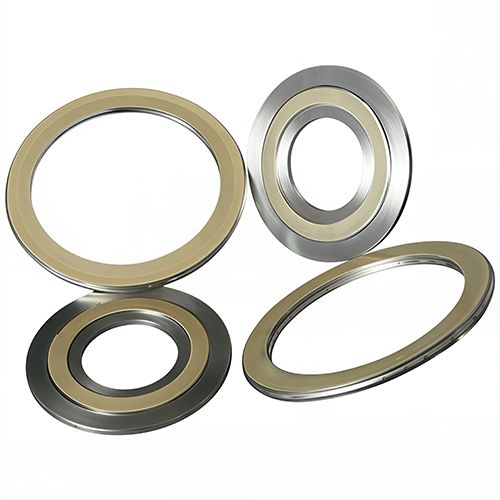
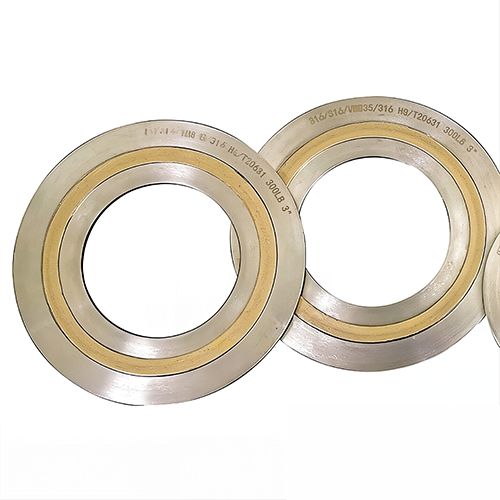
A spiral wound gasket solves this by combining a V-shaped metal strip with a soft filler. The metal winding gives the gasket structural strength and acts like a controlled spring. The filler, usually flexible graphite, flows into flange surface imperfections and maintains a tight seal. An outer ring centers the gasket on the flange and prevents over-compression, while an optional inner ring protects the winding from inward buckling and keeps the filler from being washed out by high-velocity steam. Ningbo Kaxite Sealing Materials Co., Ltd. builds each component to match the steam service envelope, so the gasket does not become the weak point in the joint.
| Component | Typical material | Function in steam service |
|---|---|---|
| Metal winding | 316L stainless, 321 stainless, Inconel | Resists blowout and maintains bolt load |
| Filler | Flexible graphite, mica | Seals flange roughness and tolerates thermal movement |
| Outer ring | Carbon steel, 304 stainless | Centers gasket and controls compression |
| Inner ring | 316L stainless | Prevents filler collapse and erosion |
At a cogeneration plant, steam bypass lines cycle from 430°C to ambient twice every shift. The plant tried rubber-bonded fiber gaskets to cut costs. Within weeks, the gaskets hardened, lost thickness, and began leaking. Operators retightened bolts, but the gaskets had already crushed and could not recover. The result was not a cheaper gasket—it was repeated downtime and a burned steam plume near walkways.
Spiral wound gaskets handle these conditions differently. The metal winding stores mechanical energy, so it keeps sealing pressure when the flange moves. Flexible graphite filler does not harden over time; it adjusts to small flange rotations and thermal expansion. The inner ring also prevents turbulent steam from pushing the filler out of the winding. This combination is why experienced engineers specify spiral wound gaskets instead of cut sheet materials in steam lines above Class 300.
| Failure mode | Ordinary gasket behavior | Spiral wound gasket response |
|---|---|---|
| Creep relaxation | Material thins and leaks over time | Metal winding acts as a spring to retain load |
| Thermal cycling | Hardens and loses sealing stress | Flexible graphite filler adjusts to movement |
| Blowout | Sheet gasket can rupture suddenly | Metal winding retains the core under pressure |
| Inward buckling | Soft gasket can fold into the flow path | Inner ring protects the seal from steam turbulence |
A utility plant ordered spiral wound gaskets for a 1500# steam line but did not include an inner ring because the supplier said it was not needed. During startup, the filler began to wash out and the joint leaked. The failure was not the gasket style; it was the specification. The same gasket can perform well in one steam system and fail in another if pressure class, temperature, filler type, flange finish, and thermal cycling are ignored.
For example, a 600# superheated steam line at 400°C requires a 316L stainless winding, flexible graphite filler, and an inner ring. A 900# line at 510°C is safer with a 321 stainless winding and high-purity graphite filler. If the system cycles frequently, the inner ring should never be omitted. If the flange is damaged or has a rough finish, a thicker filler layer or a controlled-density gasket may be needed. Ningbo Kaxite Sealing Materials Co., Ltd. reviews these operating parameters before recommending a final configuration.
| Service condition | Recommended configuration |
|---|---|
| Saturated steam up to 300 psi | 304 winding, flexible graphite filler, outer ring |
| Superheated steam Class 600 | 316L winding, graphite filler, inner ring |
| Superheated steam Class 900–1500 | 321 or Inconel winding, high-purity graphite, inner ring |
| Severe thermal cycling | Inner ring, graphite filler, 316L or 321 winding |
| Steam with oxidation risk above 450°C | 321 winding, graphite or mica filler |
A procurement buyer once ordered PTFE-filled spiral wound gaskets for a low-pressure steam dryer because they were cheaper and chemically resistant. The dryer operated at 280°C. PTFE softened and lost thickness, causing a steam leak after two months. The failure was not caused by the spiral wound design; it was caused by selecting the wrong filler for the temperature.
In high-pressure steam service, flexible graphite is the default filler because it withstands high temperature, seals flange imperfections, and remains stable under bolt load. For temperatures above 450°C or oxidizing environments, mica-filled spiral wound gaskets are sometimes used. PTFE is acceptable only for low-temperature saturated steam below about 260°C. The metal winding must also match the steam chemistry. 316L works for most steam, 321 resists high-temperature oxidation, and Inconel is selected when chlorides or extreme thermal cycling are present.
| Filler type | Maximum temperature | High-pressure steam suitability | Notes |
|---|---|---|---|
| Flexible graphite | 450–500°C continuous | Excellent | Choose high-purity grade for superheated steam |
| PTFE | 260°C | Poor above low pressure | Avoid in high-pressure steam |
| Mica | 1000°C | Good for extreme temperature | Less conformable than graphite |
| Ceramic | Up to 1200°C | Limited | Rarely used in standard steam flanges |
A supply chain team in a refinery sent an RFQ for “spiral wound gaskets, 6 inch, steam service.” The quote came back with carbon steel rings and no inner ring. The gaskets were cheap, but they were not suitable for the 900# superheated steam line. That mistake was caught only because an engineer reviewed the material test reports. A better RFQ starts with a clear specification.
When ordering spiral wound gaskets for high-pressure steam, always include the ASME B16.20 designation, flange rating, nominal pipe size, winding material, filler, ring materials, and whether an inner ring is required. Request material certificates and pressure-temperature ratings. For critical steam systems, ask for samples to verify dimensions and surface finish. Ningbo Kaxite Sealing Materials Co., Ltd. supports procurement teams with standardized dimensions and traceable certifications for every order.
| Parameter | Recommendation | Why it matters |
|---|---|---|
| Standard | ASME B16.20 | Ensures flange compatibility |
| Winding material | 316L, 321, or Inconel | Matches temperature and corrosion conditions |
| Filler | Flexible graphite | Stable under high-pressure steam |
| Inner ring | 316L or 321 | Prevents filler washout and inward buckling |
| Outer ring | Carbon steel or 316L | Controls compression and centering |
| Flange surface finish | 3.2–6.3 µm Ra | Allows filler to seal without excessive load |
| Thickness | 4.5 mm standard | Fits standard raised-face flanges |
| Certification | EN 10204 3.1 | Provides material traceability |
Even a correctly specified spiral wound gasket cannot seal a steam flange if the installation is poor. A common failure scene: a maintenance team reuses old bolts, applies grease to some threads but not others, and tightens bolts in a cross pattern only once. The gasket compresses unevenly, the outer ring bows, and steam leaks during startup.
The solution is a controlled bolting procedure. Use new or inspected bolts, apply anti-seize lubricant uniformly, and follow a star torque sequence in at least three passes. Target bolt stress should match the gasket manufacturer’s recommendation. Over-torquing can crush the spiral winding and damage the inner ring; under-torquing leaves the joint vulnerable to blowout. After the first thermal cycle, a re-torque check is recommended for critical high-pressure steam systems.
| Torque pass | Percentage of target | Purpose |
|---|---|---|
| Pass 1 | 30% | Seat the gasket evenly |
| Pass 2 | 60% | Balance the flange load |
| Pass 3 | 100% | Achieve final clamp load |
| Optional pass | 100% check | Verify load after 24 hours or thermal cycle |
Below are the two questions most purchasing engineers ask when evaluating spiral wound gaskets for steam systems.
Yes. For ASME Class 900 and 1500 steam systems, spiral wound gaskets with 316L or 321 stainless winding, flexible graphite filler, and a solid inner ring are routinely used. The inner ring is critical because it prevents filler displacement under high-velocity steam and protects the winding from inward buckling. Always verify flange finish and bolt stress because these factors determine the actual sealing performance. Ningbo Kaxite Sealing Materials Co., Ltd. supplies these higher-pressure configurations with complete material traceability.
Yes. The V-shaped metal winding acts as a spring and maintains residual stress as the flange expands and contracts. A flexible graphite filler accommodates small flange movements without losing thickness. For severe cycling, specify a controlled-density gasket, an inner ring, and a 321 or Inconel winding depending on the temperature range. Avoid PTFE filler in cycling steam because it can flow and lose sealing stress over time. A properly selected spiral wound gasket reduces the need for frequent retorquing after steam blows or shutdowns.
Procurement managers often struggle with suppliers who sell generic spiral wound gaskets without knowing the actual steam conditions. They receive no material traceability, no pressure-temperature calculations, and no support when a gasket is installed incorrectly. That turns a commodity purchase into a reliability risk.
Ningbo Kaxite Sealing Materials Co., Ltd. solves this by manufacturing spiral wound gaskets to ASME B16.20 and by supporting each order with clear material certificates, controlled dimensions, and experienced engineering advice. Whether you need standard 4.5 mm graphite-filled gaskets for Class 600 steam flanges or custom Inconel-wound gaskets for 1500# superheated lines, Kaxite produces consistent, traceable sealing products that reduce steam leaks and unscheduled downtime.
| Capability | What it means for your steam system |
|---|---|
| ASME B16.20 standard | Dimensional consistency across flanges |
| Graphite, mica, PTFE fillers | Right material for each steam temperature |
| 316L, 321, Inconel winding | High-temperature strength and corrosion resistance |
| 3.1 material certification | Traceability from melt to finished gasket |
| Custom sizes and fast sampling | Shorter outage planning cycles |
Have a specific high-pressure steam gasket question? Send your operating pressure, temperature, flange class, and medium to the sealing engineers at [email protected]. As a manufacturer and supplier, Ningbo Kaxite Sealing Materials Co., Ltd. helps procurement teams specify the right spiral wound gasket without guesswork. Visit https://www.ring-joint-gaskets.net to review standard dimensions, request a quote, or schedule a sample order for steam service evaluation.
1. Abid, M., & Nash, D. H. (2004). Comparative study of the behaviour of conventional gasketed and metallic gasketed flanged pipe joints under combined internal pressure and thermal loading. International Journal of Pressure Vessels and Piping, 81(5), 433–441.
2. Nagata, S., & Sawa, T. (2008). Effects of temperature change on sealing performance of spiral wound gasket in bolted flange connection. Journal of Pressure Vessel Technology, 130(3), 031201.
3. Kobayashi, T., & Nishida, T. (2002). The sealing performance of spiral wound gaskets under elevated temperature. Journal of Pressure Vessel Technology, 124(2), 235–240.
4. Sawa, T., Higurashi, N., & Akagawa, H. (1991). A stress analysis of pipe flange connections with spiral wound gaskets. Journal of Pressure Vessel Technology, 113(4), 497–503.
5. Abid, M. (2005). Determination of safe operating conditions for gasketed flange joint under combined internal pressure and temperature. International Journal of Pressure Vessels and Piping, 82(10), 771–781.
6. Derenne, M., Marchand, L., & Payne, J. R. (1992). Elevated temperature characterization of flexible graphite sheet gaskets. Journal of Pressure Vessel Technology, 114(1), 1–7.
7. Fukuoka, T., Nomura, M., & Nishikawa, T. (1999). Analysis of thermal and mechanical behavior of pipe flange connections with spiral wound gaskets. Journal of Pressure Vessel Technology, 121(1), 57–61.
8. Brown, W., & Marchand, L. (1990). Gasket behavior under thermal transient loading. Experimental Mechanics, 30(1), 75–80.
9. Kobayashi, T., & Hamano, K. (2004). The sealing performance of flexible graphite spiral-wound gaskets under thermal cycling. Journal of Pressure Vessel Technology, 126(4), 497–502.
10. Sassoulas, H., Morilhat, P., & Boudet, R. (2006). Ageing of metallic gaskets for spent fuel casks. Nuclear Engineering and Design, 236(14–16), 1513–1519.
-