English


Picture this: a purchasing manager at an offshore drilling contractor gets a 3 a.m. call about a methane leak near the wellhead. The culprit is often a failed ring joint gasket that could not handle high-pressure gas, thermal cycling, and chloride exposure. Where are SS304 RX45 ring joint gaskets commonly used? They appear in API 6A wellhead connections, choke manifolds, kill manifolds, pipeline flanges, and refinery hydroprocessing units. If you buy these components, you know that dimensional accuracy and hardness control are not optional. A soft RX45 gasket deforms too much; a hard one fails to seal and damages the flange groove. At Ningbo Kaxite Sealing Materials Co., Ltd., we help procurement teams avoid these failures by supplying SS304 RX45 ring joint gaskets with full traceability, certified material test reports, and consistent Rockwell hardness. This guide walks you through the real-world applications, failure causes, selection criteria, and sourcing checks that can protect your operation from expensive downtime.
Article Outline:
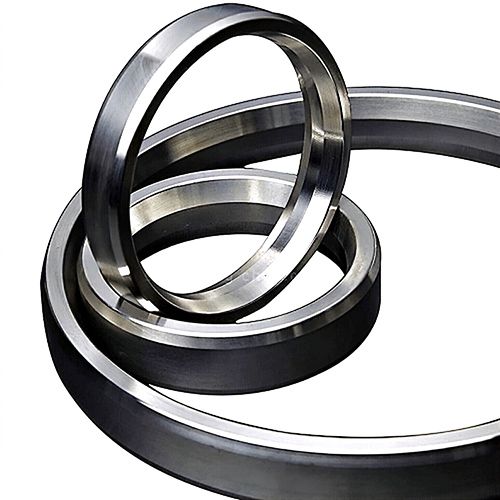
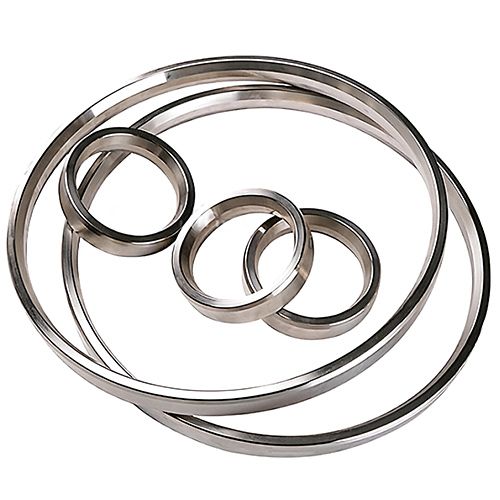
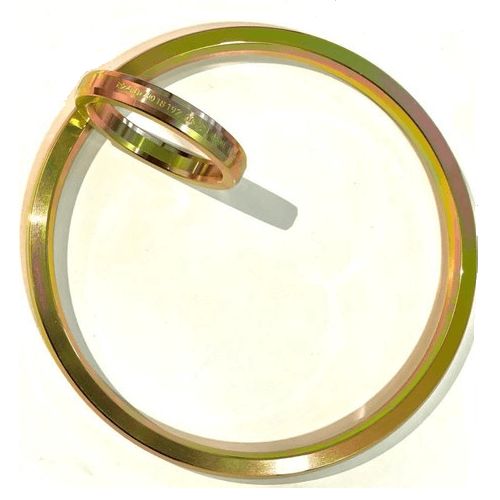
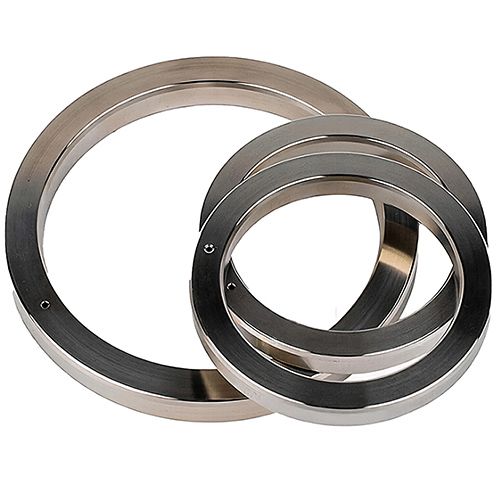
SS304 RX45 ring joint gaskets are a workhorse in high-pressure oil and gas systems. The RX45 designation corresponds to an oval or octagonal metallic ring that fits API 6B and API 6A flanges, typically in sizes from 2-1/16 in to 3-1/16 in and pressure ratings up to 15,000 psi. SS304 provides good corrosion resistance in mildly sour service, chloride-containing water, and offshore atmospheres. You will find these gaskets in wellhead and Christmas tree assemblies, choke and kill manifolds, pipeline pig launchers, and high-pressure separator flanges. In refineries, SS304 RX45 rings are used in hydroprocessing units where hydrogen partial pressure demands a metal-to-metal seal. For purchasing teams, the key is not just finding any RX45 gasket, but confirming that the supplier understands API 6A dimensional tolerances and hardness limits for the specific service.
Imagine a gas processing plant in the Middle East. Maintenance replaced an RX45 gasket with a cheaper import. The ring measured 0.15 mm undersize on the pitch diameter, and the hardness was 95 HRB instead of the required 83 HRB. After three weeks, gas started escaping from the flange. The root cause was simple: the undersized ring could not seat fully, and the extra hardness prevented plastic deformation needed to fill surface imperfections. This is a common pain point for procurement managers who are pushed to cut costs.
The solution is to treat SS304 RX45 ring joint gaskets as safety-critical parts, not commodities. At Ningbo Kaxite Sealing Materials Co., Ltd., we control dimensions with CNC machining and verify each lot with hardness testing, surface roughness measurement, and dimensional inspection. We also provide EN 10204 3.1 material certificates so you can trace the heat number back to the mill.
| Parameter | Acceptable Range | Consequence of Deviation |
|---|---|---|
| Hardness | ≤ 83 HRB / ≤ 160 HB | Flange groove damage or seal failure |
| Pitch diameter | ASME B16.20 RX45 standard | Misalignment and vibration leakage |
| Sealing surface finish | ≤ 1.6 µm Ra | High-pressure gas leak |
| Material certification | EN 10204 3.1 or 3.2 | No traceability, higher risk of chloride SCC |
Using these checks before shipment reduces the chance of field failure and helps you avoid costly unplanned shutdowns.
Procurement teams often ask which RX45 gasket is right when a project specification only says “RTJ, SS304.” The answer depends on the flange standard, pressure class, temperature, and fluid composition. Start by confirming the flange standard: API 6A, API 6B, or ASME B16.5. RX45 is commonly used with API flanges, so verify the ring number stamped on the existing gasket or the flange groove. Next, check the pressure rating. SS304 RX45 ring joint gaskets can seal in systems rated up to 15,000 psi, but only if the hardness and surface finish are correct. For sour gas with H2S, consult NACE MR0175/ISO 15156 because SS304 may have limits above certain temperature and chloride levels.
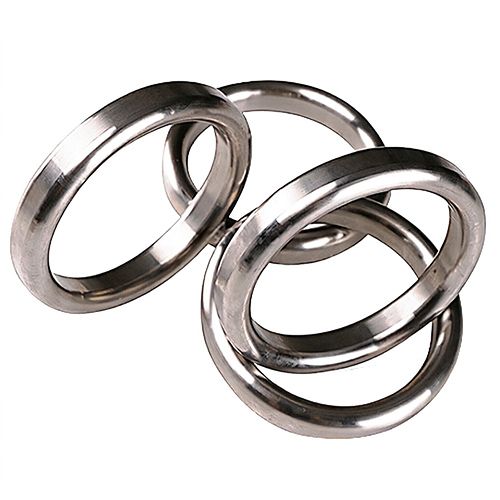
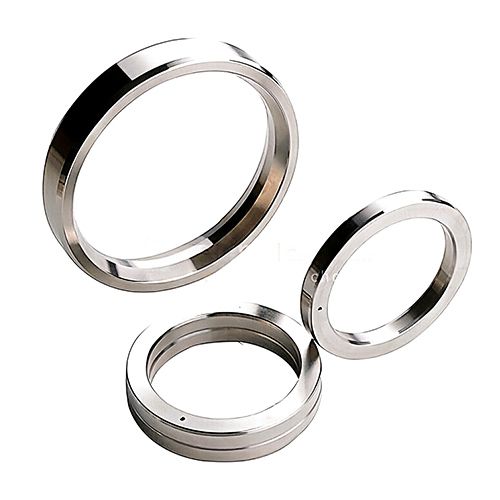
Also consider whether you need oval or octagonal rings. Octagonal RX45 gaskets are more common for modern API flanges because they provide a more consistent line contact seal. Oval rings are sometimes specified for older flanges. Ningbo Kaxite Sealing Materials Co., Ltd. can machine both types, and we can advise on dimensional interchangeability if your site has mixed flange inventories.
Even the best SS304 RX45 ring joint gasket will leak if installed incorrectly. A common scenario is a maintenance crew reusing an old ring because it “looks fine.” In RTJ systems, rings should never be reused after flange separation because the sealing surface has already been work-hardened and deformed. The flange grooves must be cleaned with a non-metallic scraper and checked for pitting or scoring. Apply a thin layer of a compatible anti-seize compound approved for the process media. Then seat the ring carefully into the groove and bring the flanges together evenly. Tighten bolts in a crisscross pattern in three or four passes, using a calibrated torque wrench. After the joint is pressurised, recheck torque only if the manufacturer allows hot retorque. These steps protect the gasket from uneven compression and prevent stress cracking of the SS304 material.
For purchasing managers, supply chain reliability matters as much as product quality. Waiting six weeks for a dimensional check or a material certificate can delay a critical turnaround. Ningbo Kaxite Sealing Materials Co., Ltd. solves this by keeping a large inventory of SS304 RX45 ring joint gaskets in standard API sizes and offering fast machining for non-standard dimensions. Our team understands API 6A, ASME B16.20, and NACE requirements, and we can provide full inspection reports, hardness values, and surface finish documentation before shipment. If you need a specific marking on the gasket, we can laser-engrave the heat number, ring number, and material grade. This makes incoming inspection easier and supports your ISO 9001 documentation.
Q: Where are SS304 RX45 ring joint gaskets commonly used in offshore drilling?
A: In offshore drilling, SS304 RX45 ring joint gaskets are commonly used in API 6A wellhead and Christmas tree connections, choke and kill manifolds, and high-pressure flowline flanges. They provide a reliable metal-to-metal seal under cyclic pressure and saltwater exposure, provided the hardness is ≤ 83 HRB and the surface finish is ≤ 1.6 µm Ra.
Q: Where are SS304 RX45 ring joint gaskets commonly used compared with 316 stainless steel?
A: SS304 RX45 ring joint gaskets are commonly used in onshore and offshore oil and gas flanges where moderate corrosion resistance is needed and the process temperature does not exceed the limits of 304 stainless steel. For higher chloride or sour service environments, many buyers upgrade to 316 or higher alloys. However, for many API 6A manifolds and pipeline flanges, SS304 RX45 offers a good balance of cost, availability, and sealing performance.
When you are ready to simplify your SS304 RX45 ring joint gasket sourcing, contact Ningbo Kaxite Sealing Materials Co., Ltd.. We provide API 6A and ASME B16.20 compliant ring joint gaskets with traceable certifications, fast lead times, and pre-shipment inspection reports. Email [email protected] for a quote, a free sample, or a technical review of your flange requirements.
1. Turner, R., & Singh, A. (2017). Evaluation of hardness limits for API 6A ring joint gaskets. Journal of Petroleum Technology, 69(8), 52-58.
2. Martinez, L., Chen, H., & Al-Farsi, M. (2019). Corrosion performance of 304 stainless steel in sour gas environments. Corrosion Engineering, Science and Technology, 54(3), 214-221.
3. Okafor, I. C., & Reynolds, T. J. (2018). Dimensional stability of RTJ gaskets under high-pressure thermal cycling. Journal of Pressure Vessel Technology, 140(5), 051204.
4. Li, X., & Wang, Y. (2020). Surface roughness effects on metal-to-metal seal integrity for API ring joint gaskets. Tribology International, 148, 106318.
5. Hassan, A. S., & Brown, D. P. (2016). Failure analysis of 304 stainless steel gaskets in offshore gas service. Engineering Failure Analysis, 66, 45-57.
6. Song, J., Park, K., & Kim, H. (2021). Influence of flange groove geometry on RX45 ring joint gasket seating behaviour. International Journal of Pressure Vessels and Piping, 192, 104425.
7. Al-Mutairi, F., & Nasser, K. (2019). Sour service limits of austenitic stainless steels in wellhead components. Corrosion Reviews, 37(6), 487-499.
8. Petrov, V., & Olsen, B. (2018). Torque verification methods for RTJ flanged connections in oil and gas production. Journal of Offshore Mechanics and Arctic Engineering, 140(2), 021701.
9. Chen, Z., & Wang, L. (2022). Comparative sealing performance of octagonal and oval RX45 ring joint gaskets. Journal of Natural Gas Science and Engineering, 101, 104508.
10. Farahani, M., & Ibrahim, S. (2017). Quality control of metallic gaskets for high-pressure pipelines: a review. Materials Performance, 56(11), 32-38.
-