English


Picture this: a high-pressure wellhead flange on an offshore platform is being torqued after a scheduled maintenance window. The crew is waiting, the weather window is closing, and the sealing surface has to hold 15,000 psi without a micro-leak. In that moment, every procurement decision traces back to one critical question: How does an RX ring type joint gasket work? The answer is not just academic. RX ring joint gaskets create a pressure-energized metal-to-metal seal in API 6A flanges. When the flange bolts are tightened, the ring is compressed into the grooved faces, and the soft metal of the gasket deforms slightly to fill surface irregularities. As internal pressure increases, the gasket is driven deeper into the groove, which raises contact stress and improves sealing performance. This self-energizing behavior makes the RX design essential for oil and gas, subsea, and high-pressure valve applications. But selecting the right RX gasket is not only about geometry; it depends on material, hardness, dimensional accuracy, and supplier reliability. Below, we explain the working principle, sourcing pain points, and practical selection criteria so procurement professionals can make confident decisions.
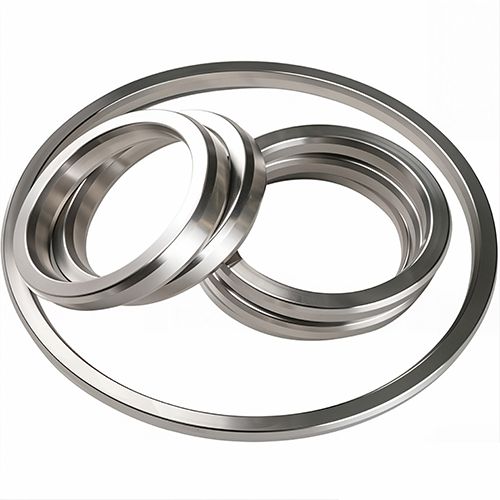
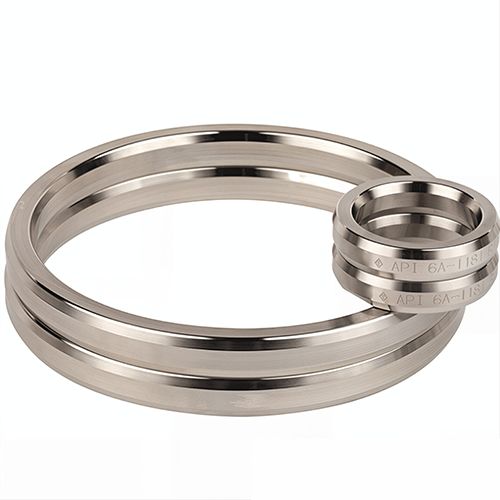
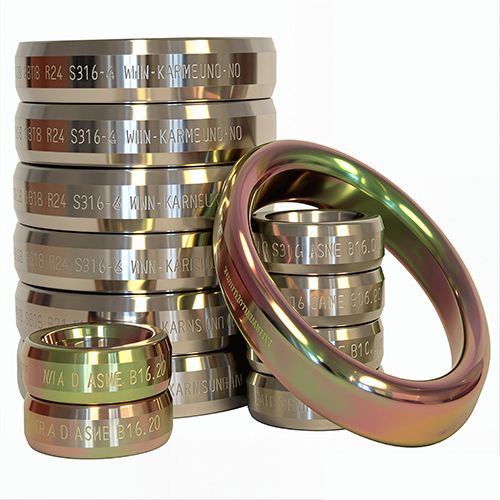
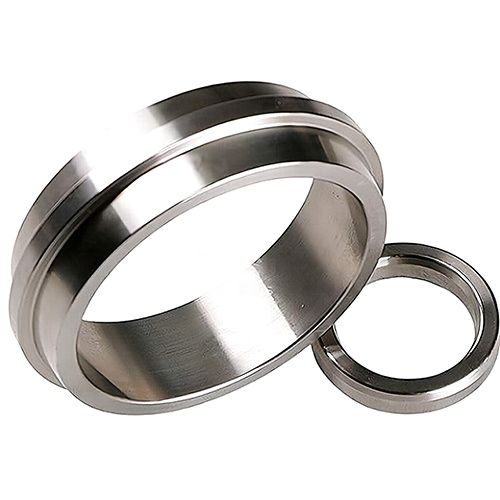
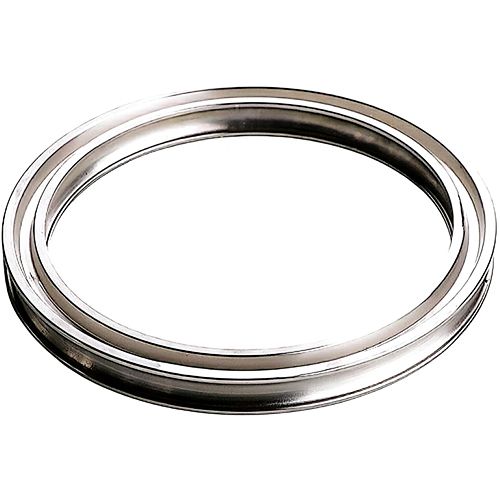
An RX ring type joint gasket is a precision-machined metal seal designed for API 6B flanges used in wellhead and Christmas tree equipment. Unlike flat sheet gaskets, RX gaskets are solid metallic rings with a trapezoidal cross-section and a pressure equalization hole. They are manufactured to strict dimensional tolerances under API 6A specifications. The RX design covers standard pressure ratings from 2,000 psi to 5,000 psi, although many procurement teams also specify RX gaskets for specialized high-pressure service where a pressure-energized seal is required. Common ring numbers include RX20 through RX99, with RX45, RX54, RX57, and RX70 being frequently ordered by oilfield distributors.
Because the gasket must deform into the flange groove, its material hardness is always controlled to be lower than the flange hardness. This protects the expensive flange face from damage while allowing the gasket to fill small surface imperfections. For buyers, the key is not just getting a ring that looks right; it is getting a ring with the correct hardness, surface roughness, and dimensional certificate.
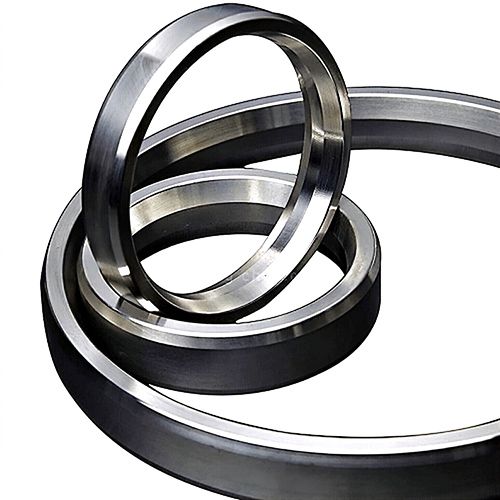
The sealing mechanism of an RX ring type joint gasket is based on pressure-energized metal-to-metal contact. During bolt-up, the ring is seated into a matching groove on each flange face. The initial preload compresses the gasket, creating a primary contact stress that blocks the leak path at low pressure. As internal system pressure rises, fluid pressure acts on the inner surfaces of the ring. This pressure generates an axial force that pushes the gasket more firmly into the flange grooves. The resulting increase in contact stress improves the seal exactly when it is needed most.
Two failure modes threaten this process: insufficient preload and excessive hardness mismatch. If the bolts are not torqued evenly, the ring may not seat fully. If the gasket is too hard, it will not conform to the groove and may damage the flange. If the gasket is too soft, it may extrude under extreme load. That is why API 6A sets maximum hardness values for RX ring materials and why a trusted manufacturer must provide hardness test data with every batch.
Procurement engineers frequently face the same set of problems when buying RX ring type joint gaskets. A common scenario is a delayed oilfield maintenance project where a worn RX54 gasket needs replacement. The buyer urgently requests material certificates, but the supplier sends only a commercial invoice. Or the gaskets arrive with hardness readings outside the API 6A limit, forcing the QA team to reject the entire batch. Another frequent issue is dimensional drift: an RX ring may look correct but fail a ring gauge check because it was machined from substandard bar stock.
These problems lead to costly downtime, rework, and safety risks. The solution is to work with a supplier that treats every RX gasket as a pressure-critical component, not as a commodity item. That means full traceability, material test reports, hardness inspection records, and dimensional verification before shipment.
Ningbo Kaxite Sealing Materials Co., Ltd. addresses these pain points through a controlled manufacturing and inspection process. Every RX ring joint gasket is CNC-machined from traceable bar stock, with hardness testing performed on each heat lot. The company supplies RX gaskets in soft iron, low-carbon steel, 304 stainless steel, 316 stainless steel, Inconel 625, Inconel 825, and duplex stainless steel. Standard and custom dimensions are available, and many RX numbers are kept in ready stock for urgent wellhead repairs.
| Pain Point | Kaxite Solution |
|---|---|
| Unverified material and hardness | Batch-specific mill test reports and hardness readings supplied before shipment |
| Dimensional rejection on site | CNC-machined rings with 100% dimensional inspection against API 6A tolerances |
| Long lead times for non-stock sizes | In-house production capability with fast turnaround on custom RX ring numbers |
| Mixed lots and poor traceability | Heat number marking, packing list traceability, and retained samples for repeat orders |
Material selection for RX ring joint gaskets depends on service temperature, pressure, and fluid composition. In sour service, the gasket material must meet NACE MR0175/ISO 15156 requirements. In high-temperature steam or gas applications, stainless steel or nickel alloys are often required. Lower hardness values are generally preferred for protecting flange grooves, but the material must still resist extrusion under maximum system pressure.
| Material | Maximum Hardness (HBW) | Typical Application |
|---|---|---|
| Soft iron | 56 | Standard oil and gas service, low pressure |
| Low-carbon steel | 68 | General wellhead service, moderate pressure |
| 304 stainless steel | 83 | Corrosive environments, chemical exposure |
| 316 stainless steel | 83 | Chloride-bearing fluids, offshore platforms |
| Inconel 625 | 100 | High temperature, sour gas, subsea service |
| Duplex stainless steel | 100 | High strength and good corrosion resistance |
For procurement teams, the supplier should provide a hardness test certificate, dimensional inspection report, and material chemical composition sheet with each shipment. These documents close the gap between what was ordered and what actually arrives on site.
Even a perfectly manufactured RX ring joint gasket can fail if installation is poor. Before installation, the flange grooves must be cleaned and inspected for scratches, corrosion, or galling. Any damage to the groove can create a leak path that the gasket cannot seal. The RX ring should be checked against the flange size and ring groove angle to prevent mismatch. Proper lubrication of the contact surfaces, when permitted by the service specification, reduces the risk of galling during make-up.
Bolting should follow a controlled crossing pattern in multiple passes. After make-up, a visual inspection should confirm that the flange faces are evenly pulled together and no excessive gap remains. Many operators also require a pressure test after assembly. By combining correct torque, clean grooves, and a dimensionally verified RX ring, the pressure-energized seal can perform reliably for the full service life of the connection.
Q1: How does an RX ring type joint gasket work in high-pressure oil and gas service?
A: In high-pressure service, the RX gasket works by converting internal fluid pressure into additional sealing force. After initial bolt preload creates the first metal-to-metal contact, system pressure pushes the ring deeper into the tapered flange grooves. This increases the surface contact stress and maintains a tight seal even when pressure fluctuates. The gasket's pressure equalization hole also helps balance pressure across the sealing surfaces, preventing unintended lifting.
Q2: How does an RX ring type joint gasket work differently from an oval or octagonal RTJ gasket?
A: RX ring joint gaskets use a pressure-energized cross-section and are designed specifically for API 6B flanges. Oval and octagonal RTJ gaskets work primarily through controlled compression in flat-bottom grooves and do not typically have the same self-energizing pressure response. RX gaskets are also not interchangeable with oval or octagonal RTJ gaskets, because the flange groove geometry and standoff dimensions are different. Using the wrong style can prevent proper seating and cause leaks.
For serious procurement teams, the next step is to challenge your current RX gasket supplier. Ask for a test report for hardness, dimensional inspection, and material chemistry before you approve a purchase order. If the supplier cannot provide these documents quickly, you are carrying unnecessary risk in your supply chain. Ningbo Kaxite Sealing Materials Co., Ltd. has built its reputation on solving these exact problems for oilfield distributors, wellhead service companies, and maintenance buyers. The company supplies API 6A-compliant RX Ring Type Joint Gaskets with full traceability, competitive lead times, and reliable technical support. Visit https://www.ring-joint-gaskets.net to review the product range or contact [email protected] for a quotation. Your flange integrity depends on the quality of the ring you install.
API Standard 6A. (2018). Specification for Wellhead and Christmas Tree Equipment. American Petroleum Institute, 21st Edition.
Zhou, W., Chen, L., & Ma, Y. (2020). Contact stress analysis of RX ring gaskets under preload and internal pressure. International Journal of Pressure Vessels and Piping, 184, 104112.
Liu, H., Zhang, X., & Wang, Q. (2019). Numerical simulation of metal-to-metal sealing performance for API 6B flange connections. Journal of Pressure Vessel Technology, 141(5), 051205.
Rao, S. S., & Reddy, K. M. (2021). Effect of material hardness on leakage behavior of ring type joint gaskets. Engineering Failure Analysis, 122, 105286.
Chen, J., & Xu, B. (2018). Experimental study on pressure-energized seals used in subsea wellhead systems. Ocean Engineering, 157, 52-61.
ASME B16.20. (2017). Metallic Gaskets for Pipe Flanges: Ring-Joint, Spiral-Wound, and Jacketed. American Society of Mechanical Engineers.
Farhat, Z., & Alam, M. S. (2020). Hardness and surface damage of metallic gaskets in sour service environments. Materials and Corrosion, 71(8), 1298-1307.
Kim, D. K., & Park, J. H. (2019). Failure analysis of an RX ring gasket in a high-pressure wellhead assembly. Journal of Mechanical Science and Technology, 33(10), 4869-4876.
NACE MR0175/ISO 15156. (2015). Petroleum and natural gas industries — Materials for use in H2S-containing environments in oil and gas production. NACE International.
Wang, F., Gao, X., & Li, B. (2022). Finite element modeling of gasket recovery characteristics for repeated make-up of API flanges. Journal of Natural Gas Science and Engineering, 99, 104421.
-